My friend Nigel and I recently fished a favorite brown trout stream in Indiana County, Pennsylvania. It was a place we hadn’t been in a couple years, a place we enjoy because we can wade a few trackless miles, placing a car at one end of the stretch and another car at the other end. The water wasn’t as high as we might have liked and the fishing wasn’t exactly record-setting but we just enjoy our time out here in the western Pennsylvania forest in a seemingly pristine setting. At the tail end of a long day’s wade, we crossed a crude barrier splattered with a handful of “Posted” signs barring trespassing in the reaches we’d just finished fishing.
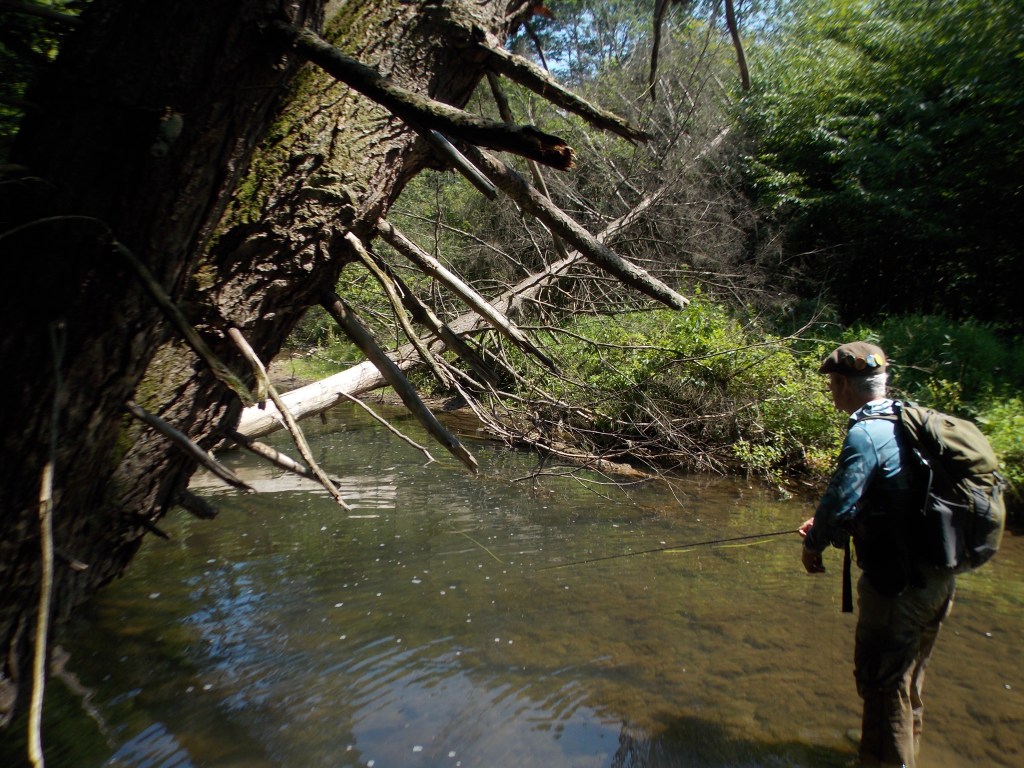
Ownership of some of the land we’d just passed through had changed since we’d last visited and we were now barred from entry. This favorite stretch, first described by me in my book The Dying Fish, was now part of someone’s private preserve and we aren’t allowed in. We were both glad, at least, that we’d gotten in our day’s fishing before discovering this.
Land ownership changes from time to time here in Pennsylvania and across the United States – it’s a fact of life. The best way to avoid this might be to declare all wild lands government preserves but that’s the sort of fiat that accompanies totalitarian regimes, something that comes with an even more distasteful set of downsides. Or, if government were to simply “freeze” land ownership now as it currently stands, deeds never changing hands, government keeping what it has and private citizens keeping only what they have, the economy would generally stagnate. Certainly the real estate market would, or rather, that market would disappear. People who could see opportunities in properties that others couldn’t would have no way to venture something new. People with the financial prowess to invest in something new couldn’t expand beyond perhaps the two acres they currently own, despite their years of hard work to prepare for something better.



And perhaps the best fish and wildlife preserves out there are private properties that the general public are barred from entering – disappointing as the Posted signs may be. There’s a good case to be made. We’ve come to assume that protection of fish and wildlife must come along with the official establishment of government parks, preserves, game lands and national forests. But when ten acres or so is acquired, posted and left to remain forest, a preserve is created of enormous benefit to plants, fish and wildlife.
We like the certainty of calling something “forever wild” when it becomes a named park or refuge but what could be less natural than imposing a “forever” designation on anything wild? Nature is nothing but change. The changes over geologic time have been literally earth-rending. Over centuries, climate has changed radically – it always has and continues to now. In decades, species spread into new ranges and contract their former ranges and in a matter of hours, stream conditions pass from low and clear to turbid and raging.
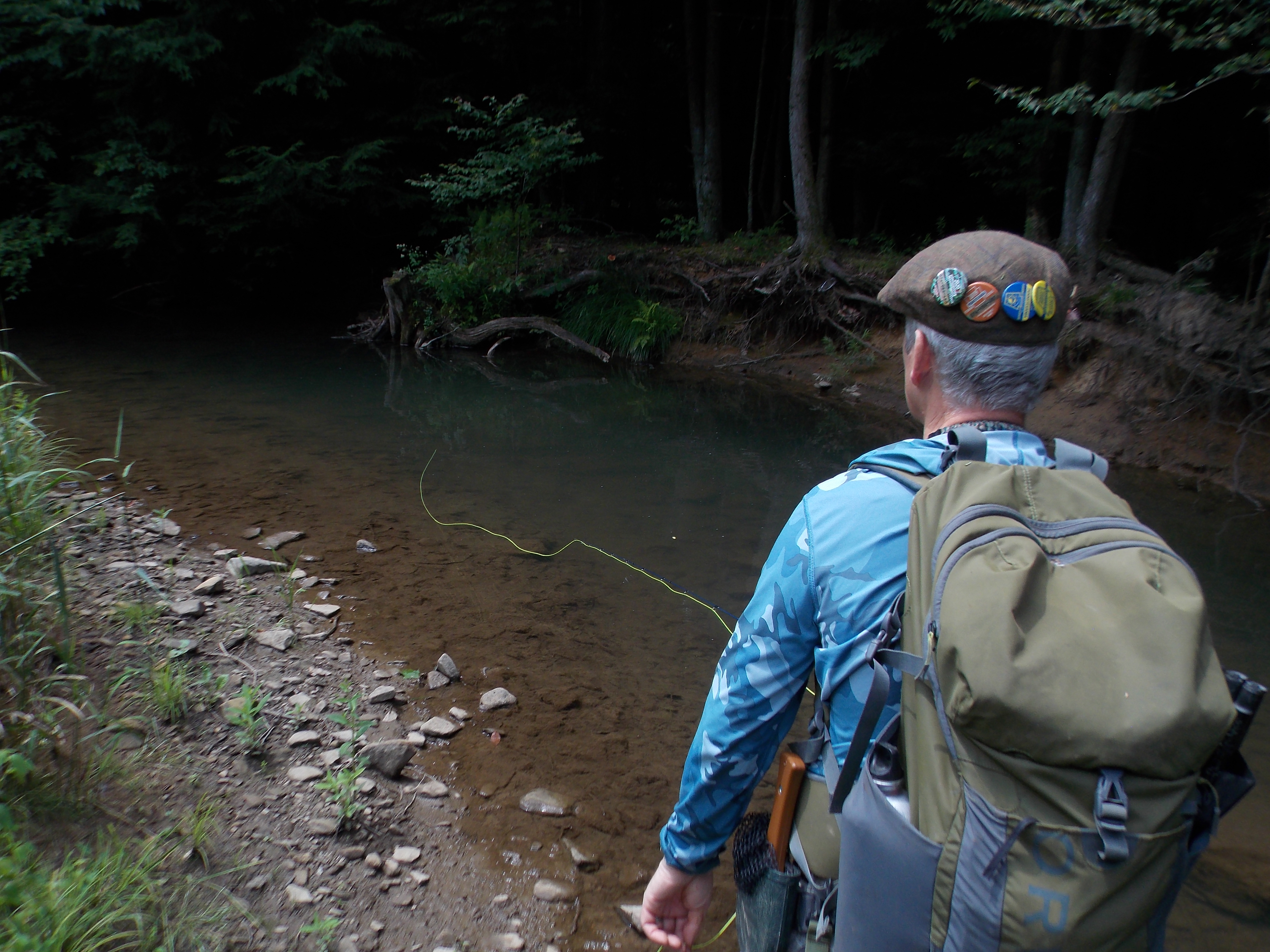
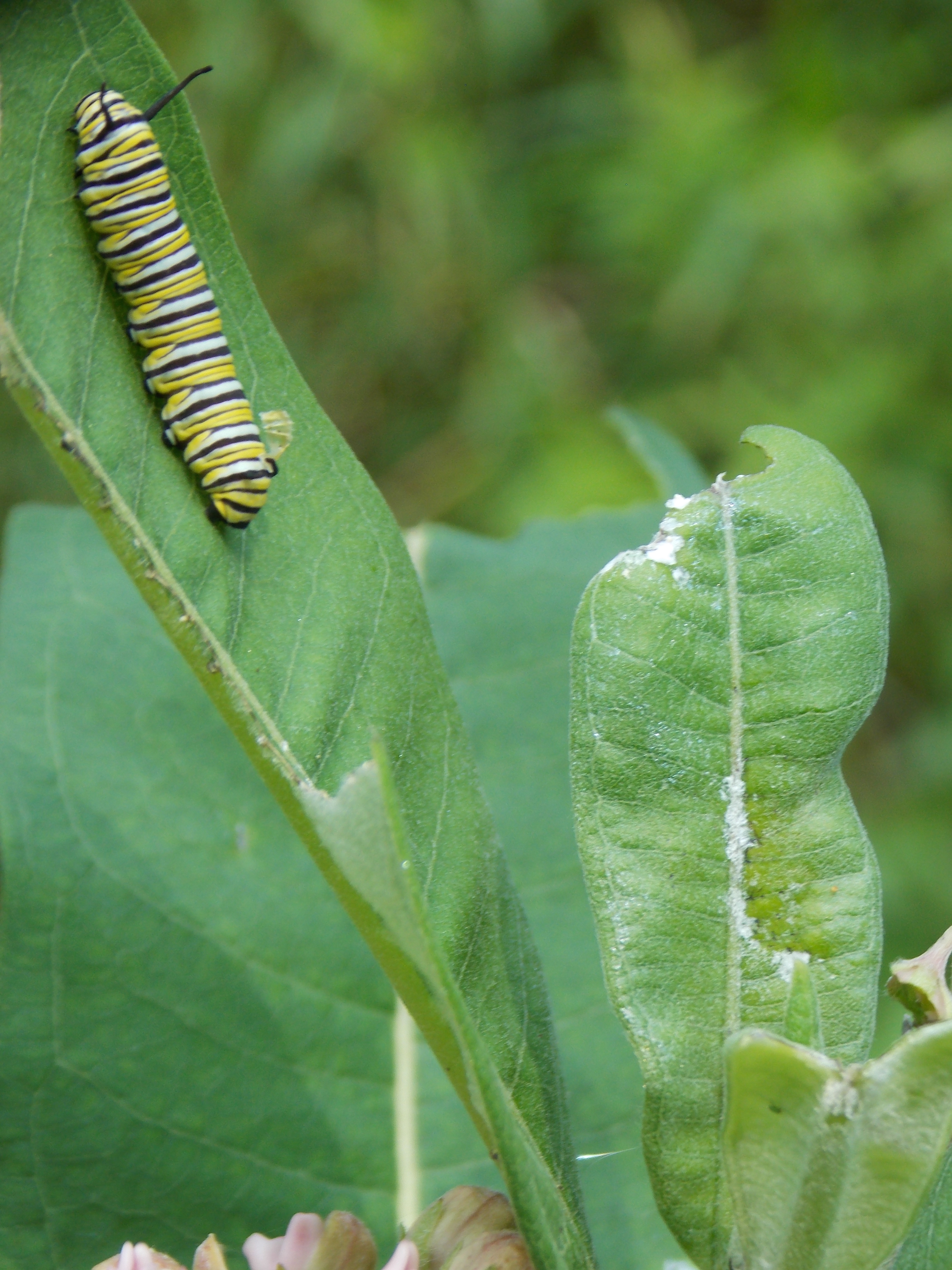


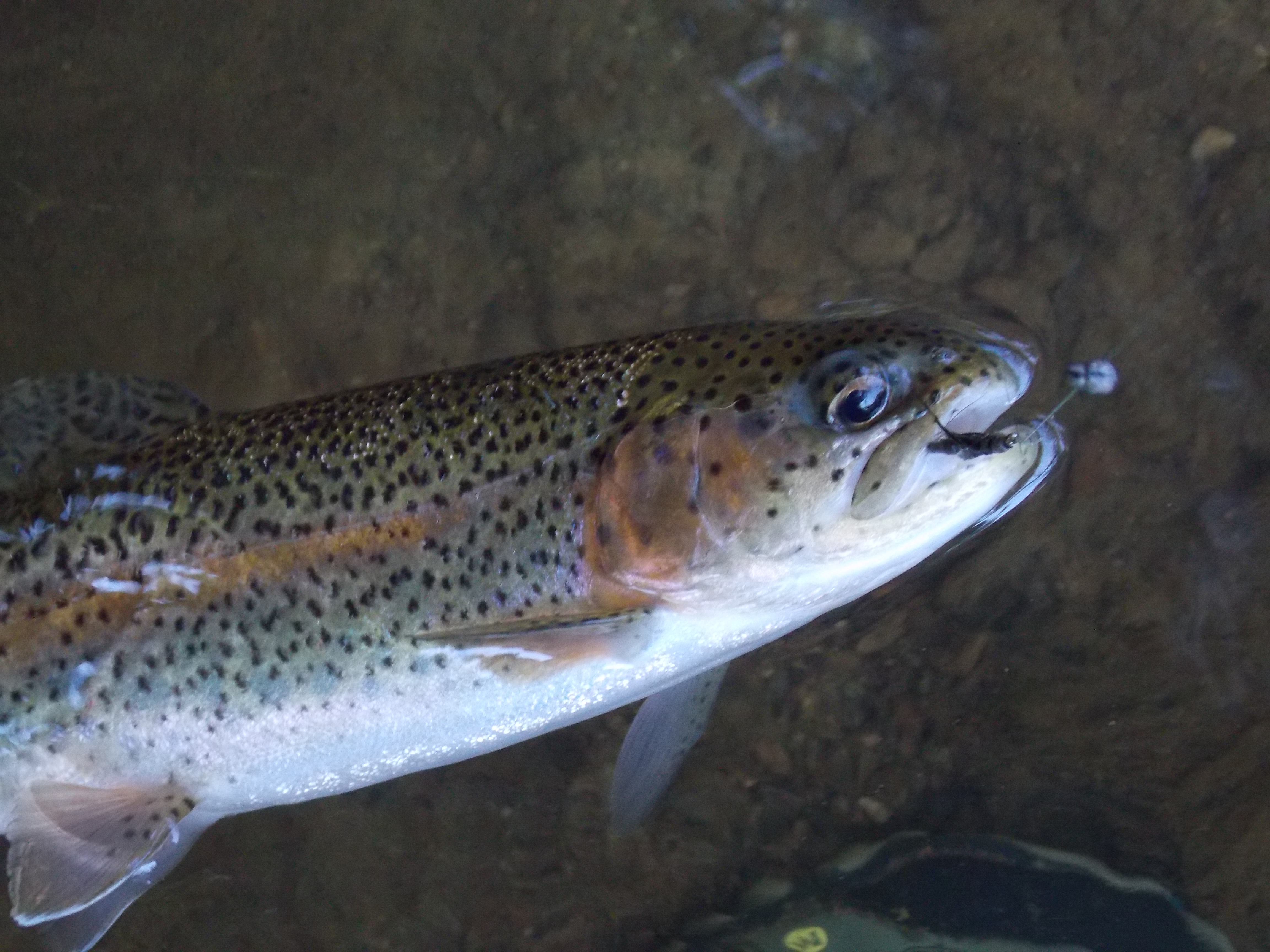
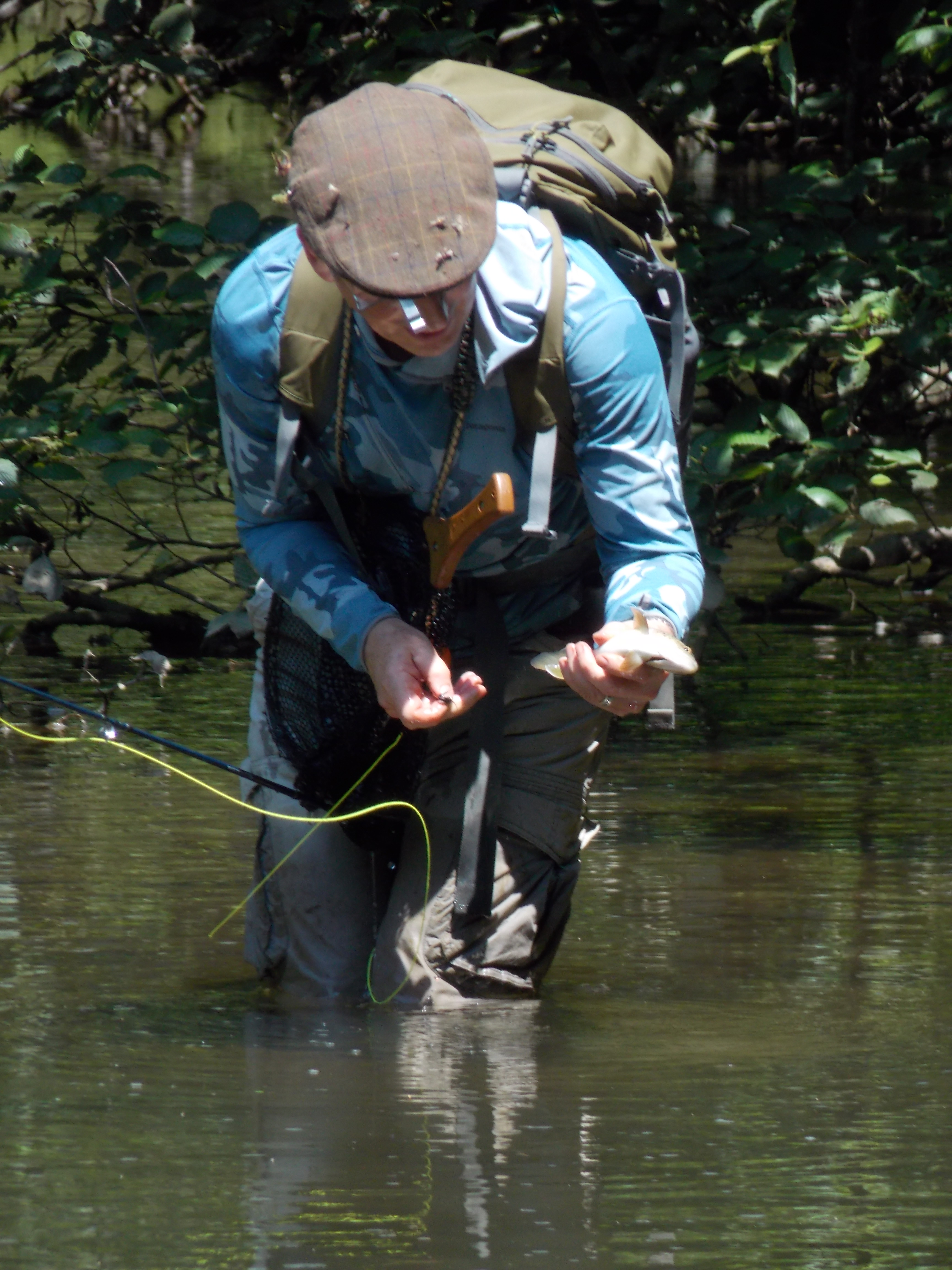
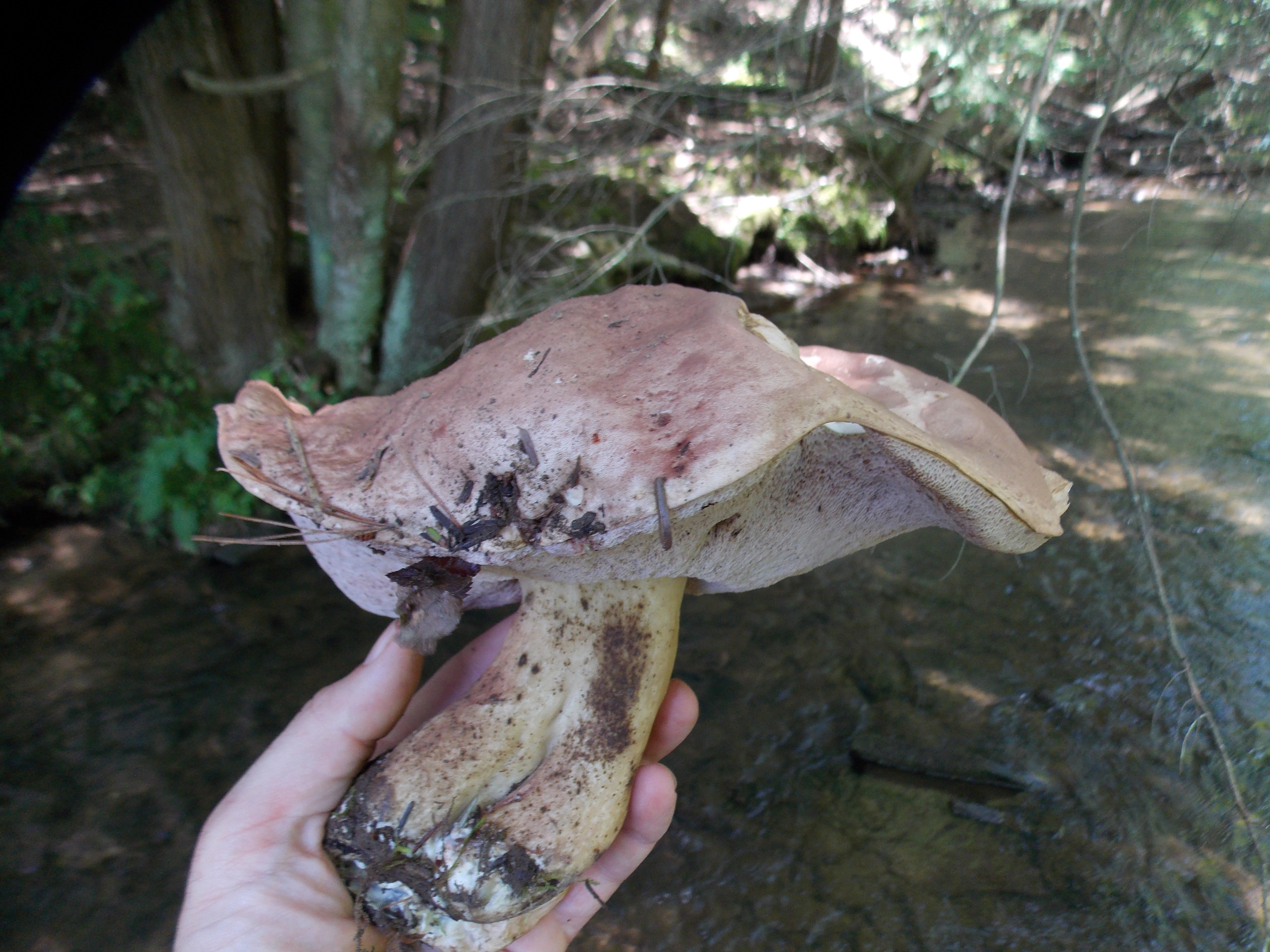
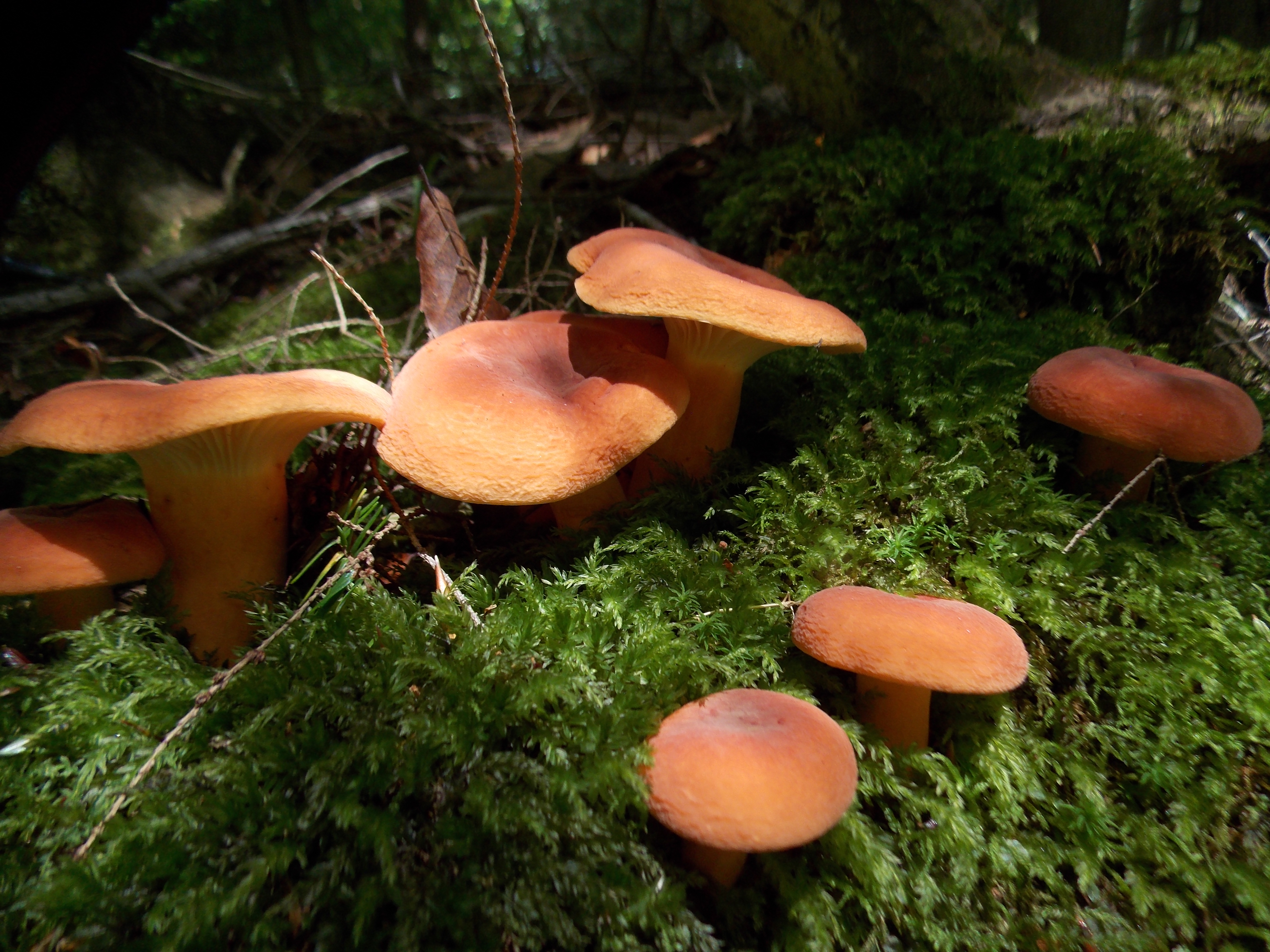
The stream Nigel and I fished was full of brown and rainbow trout but the hemlocks all around would have once overhung a spring-fed brook trout fishery. The day before we showed up the water had been too high and dirty here to even present flies but we fished low and clear pools today. We passed hundreds of lactarius mushrooms that wouldn’t have been here a few days earlier. There were species of birds here I’d never seen before. The individual pools and runs were re-arranged and there were dead trees washed into new places and washed out of old places, all of which the trout would have had to adapt to, sometimes quickly.
But this is no real problem for wild trout -they know nothing but adaptation; it’s necessary to survival in a dynamic world. They know that every cataclysm brings felicities they couldn’t have dreamed of before the flood hit, before the wood along the shore was felled or before the water temperature changed. New feeding, breeding and hiding opportunities are created as others whither or wash away.
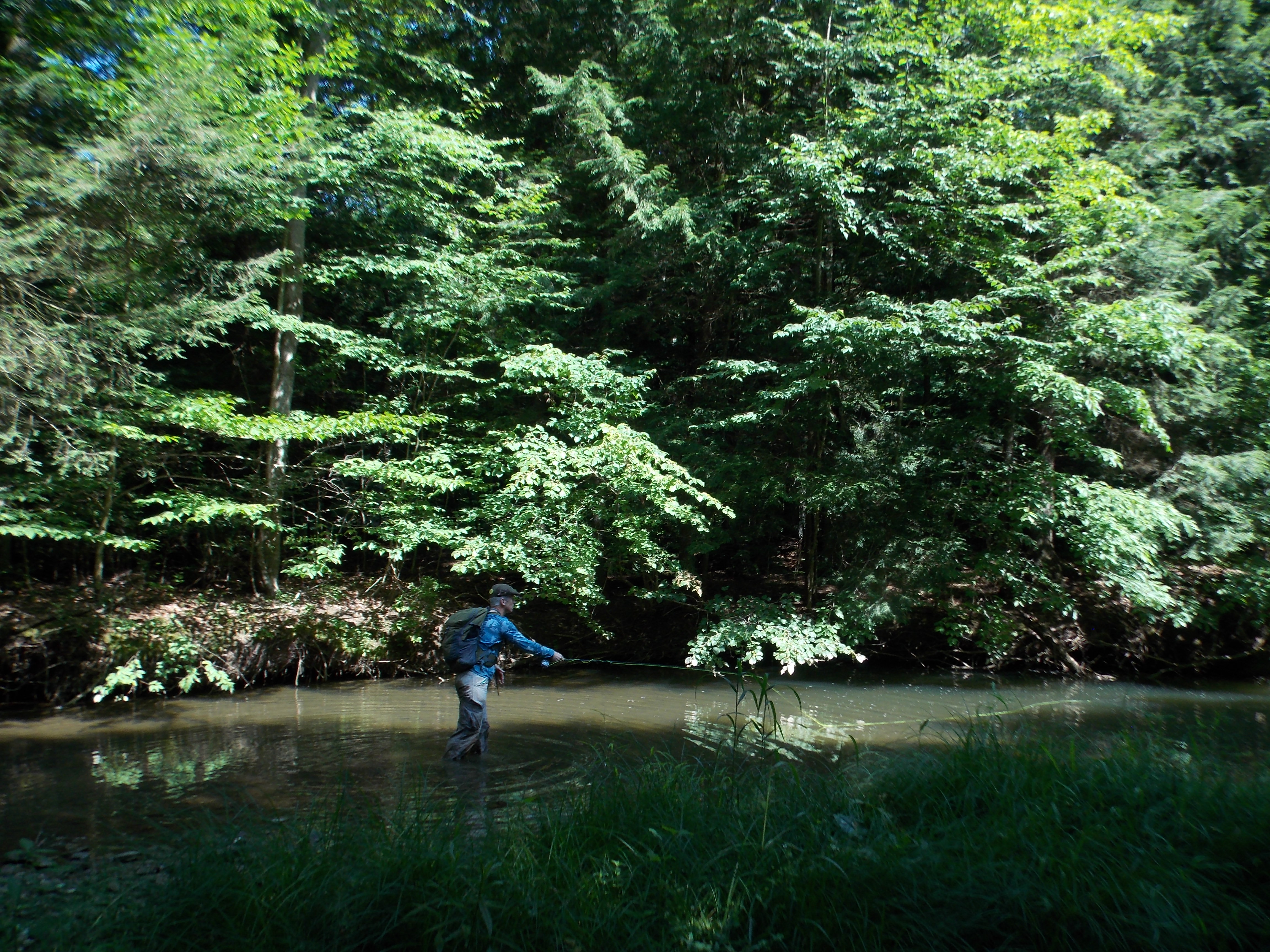
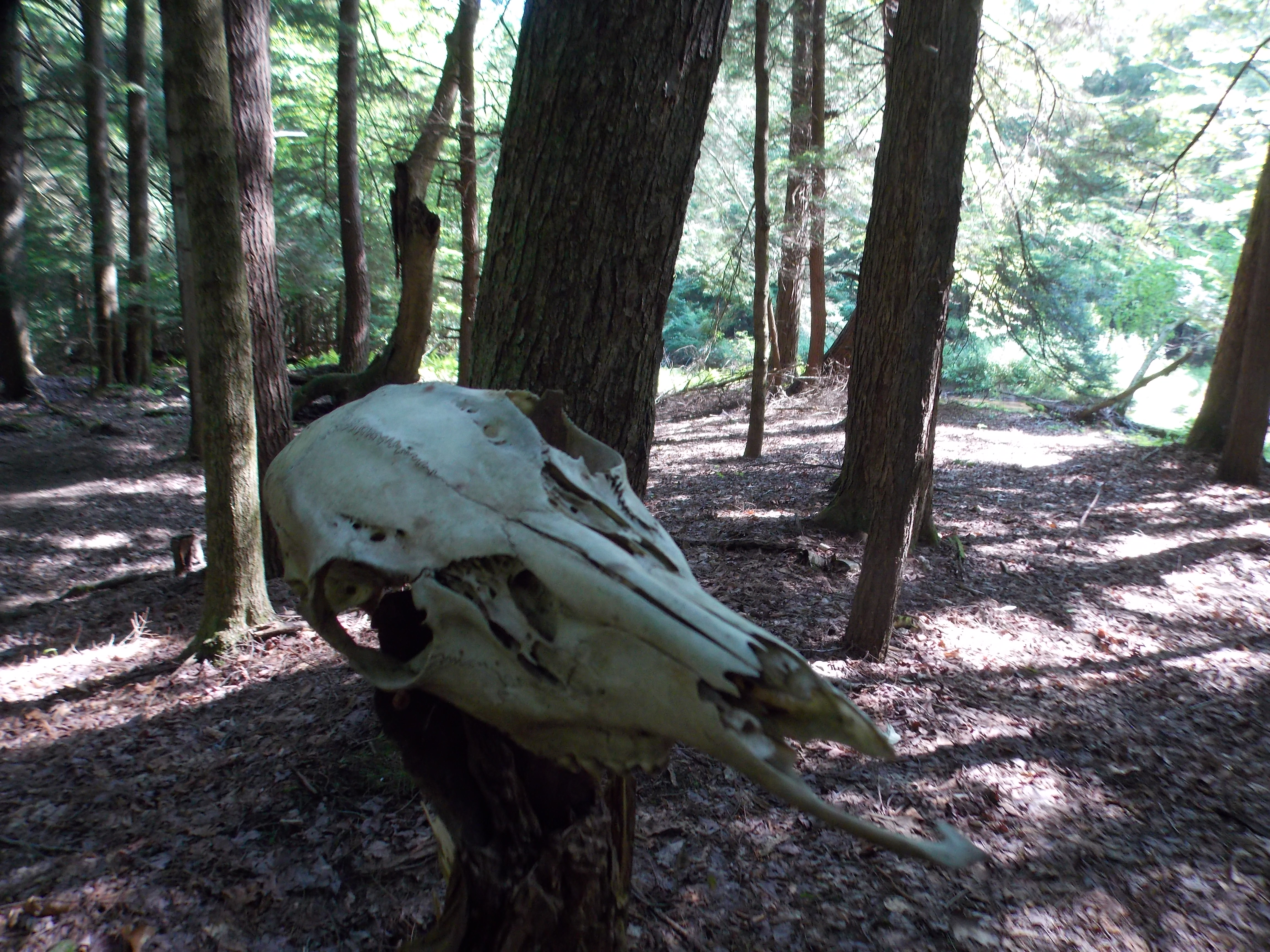
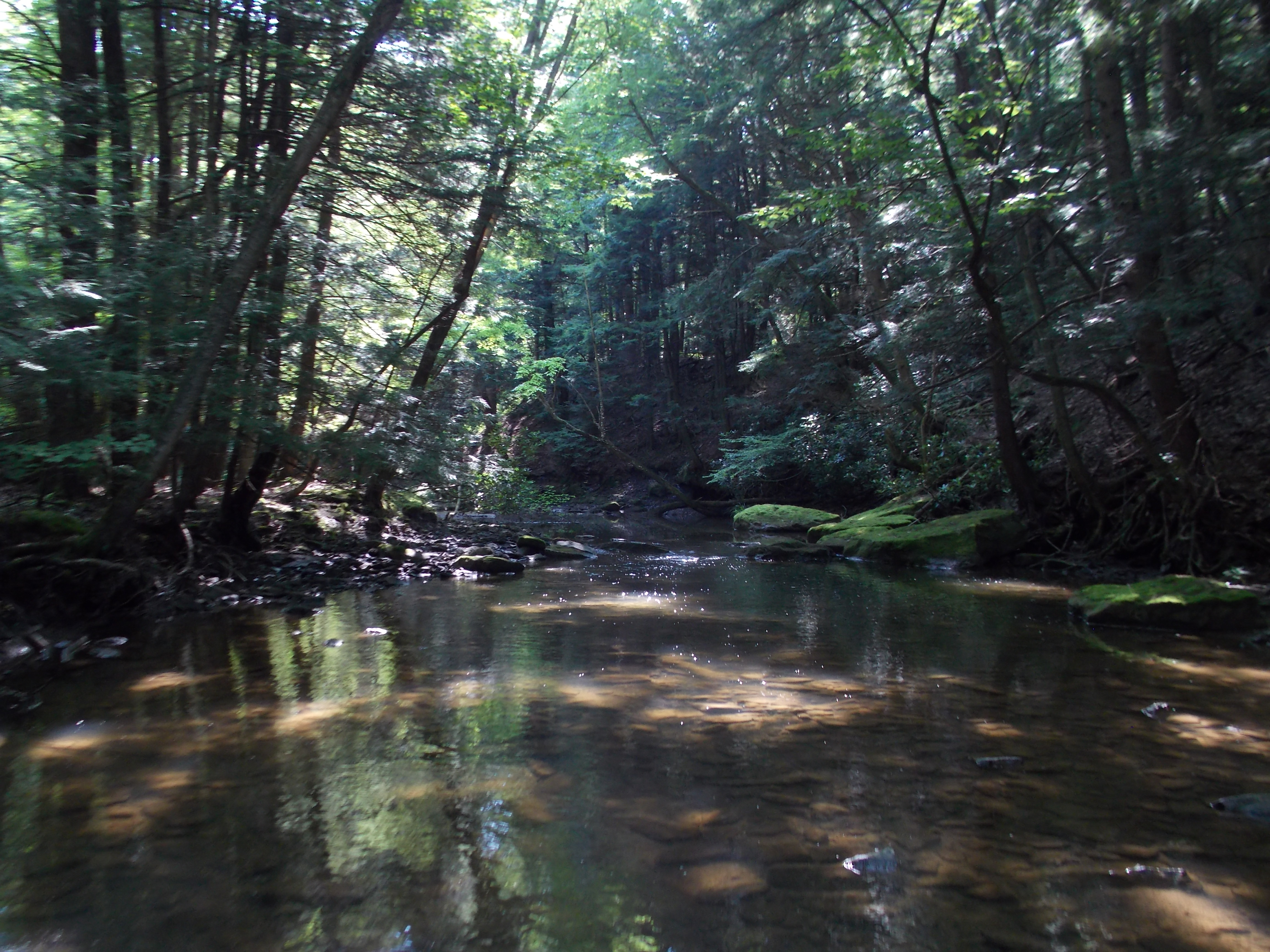
It would be good to assume for ourselves the nonplussed attitude of wild trout. Nigel and I also complain, at times, about the difficulty of simply choosing where to fish next, with hundreds of options available to us here in western Pennsylvania. So, our selection process just got a little easier – we’ve got 627 choices left, by my count.
Sometimes access to a property is lost and, just as likely, new access is acquired. Another friend, Malcolm, was recently on the acquisition end of things and I now have access to a stretch of the Stony Creek River which I did not previously. I slept on its banks one night last week just to test the new site. I rate the moss as comfortable and the hemlocks as sheltering. Fishing could have been better but I’ll keep probing as the season evolves. And this gives me hope as I continue to fish: Things will change – that’s certain.


 Woodrise