We’ve all experienced it: arriving at a favorite fish-producing creek only to find the water too high, muddy, turbid, silty, and opaque to even think about it. Maybe it’s time to go find another favorite creek. Maybe and maybe not.

As an angler, you do have the option to hit the road, sticking to clear waters where at least you can see the fish. Then too, maybe by tomorrow things will have cleared back up and it will be time to fish. But what if by passing up muddy water, you’re passing up opportunity? There may be good reasons to stay and put in some time in the flood waters.
First, if you’re the one who stays to fish these opaque waters, it may well be that you’ll have the water to yourself. All too many anglers flee turbidity, assuming maybe that fish can see no better than they can in such conditions or that maybe fish stop feeding when the waters muddy.
To be completely honest, though, there are fishermen in large parts of the country who know nothing but muddy water fishing – it’s all they’ve got to work with – and they’ve long known that the fish are fine in mud. If you’re new to muddy water fishing though, you may be shocked to find that, in fact, fish have little trouble finding your lure or bait, in all but the worst conditions. Remember, muddy waters may seem like an exceptional situation to you but fish live in these waters as they change all the time. They’ve seen this before and they’ve fed and they’ve survived.


I often prefer muddied waters because the fish cannot see me or at least cannot as easily. And I wouldn’t really know this without years of experience in clear and muddy waters. I know that I can worry a lot less about stealth as I fish muddy water. I can also take a few to several fish from one hole without disturbing the others whereas in clear water, they seem to recognize much more quickly the game that’s afoot or at least recognize you as a predator.
Finally, you should spend time on muddy waters because you may find that you catch even more fish than you did when sticking to clear water where you can see the fish before they’re caught. In general, this has been true for me. I’ve been known to walk away from clear water.
I grew up mostly in a tiny town in the western Maine woods. Here, the waters were rocky, cold and clear. I did a good bit of fly-fishing for brook trout and landlocked salmon as a kid. I generally didn’t like muddy conditions, though these were rare in the waters I fished. I thought that the dries and streamers I fished couldn’t be seen except in the most pristine optical conditions.
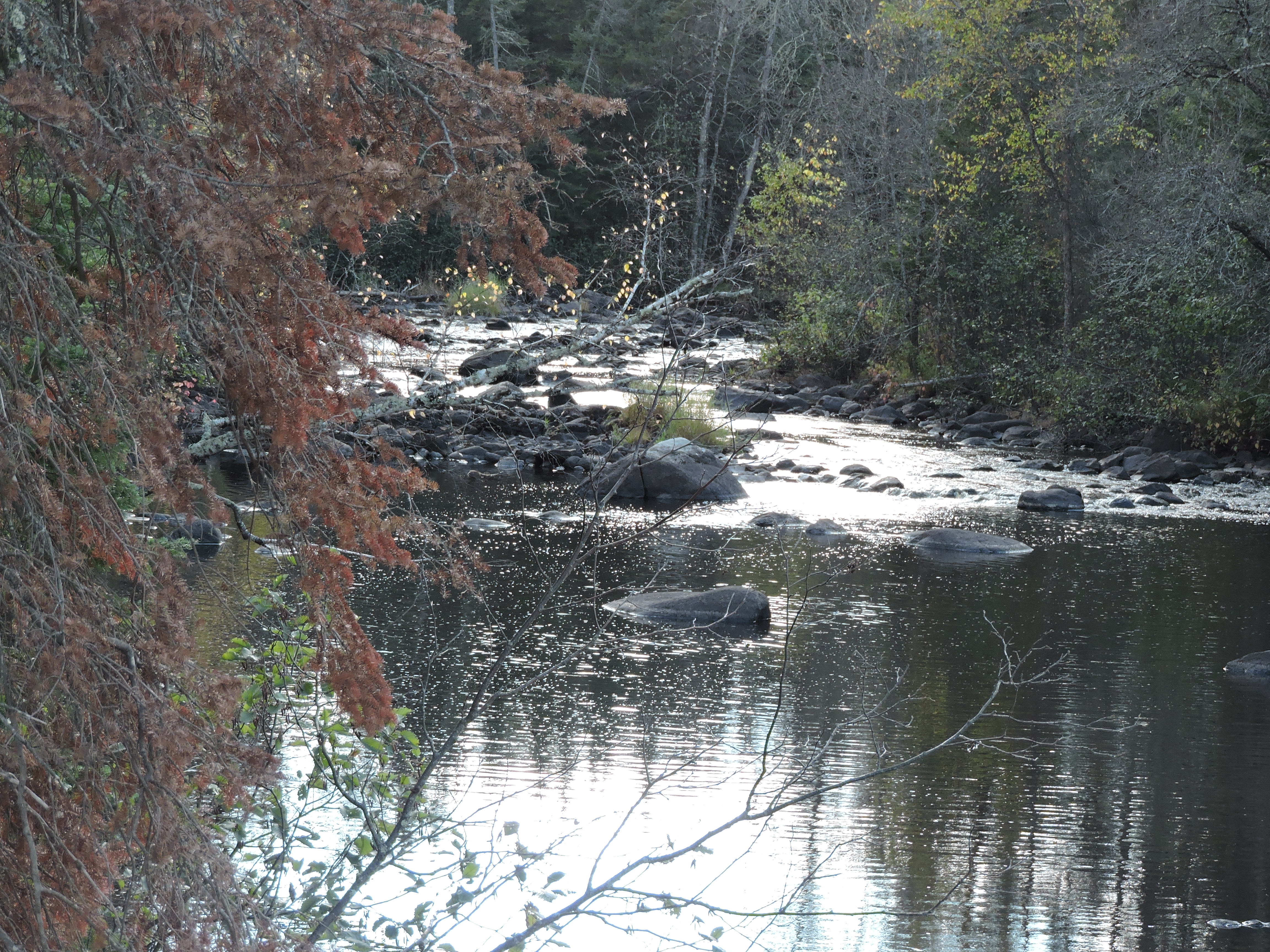


But there was a group of small ponds behind the house that was the exception to the clear-water rule that waterbodies seemed to follow in the region. These were shallow, weedy and populated with what most people in my town would consider “junk fish”: creek chub, fallfish and yellow perch. When I did begin to fish here though, I remember finding that fish never really seemed to have trouble finding my bait, whether pegged to the bottom or suspended below a bobber. And when I think about fishing during childhood in Maine, I think now that probably more pounds of fish came from those ponds than anywhere else. And before I left, I discovered a denizen of those ponds that was utterly unsuitable to the cold glacial lakes of the region: a catfish, the black bullhead – a rarity known a “horned pout” to the locals. But if I’d stayed away from muddy water, I never would have known that these could be found in the western mountains of Maine.
After moving to upstate New York, I adapted quickly to fishing turbid waters and I found that not only the new warmwater fishes of this region were happy to hit in such conditions but the rainbow and brown trout I found here often would as well. One of my very first fishing experiences in this town involved a brook that passed through town as a series of ditches on its way to the Tioughnioga River. As spring was coming on, this brook flooded, becoming deep, fast and taking on a chalky color. But the first evening I tried it, just stepping off the sidewalk in downtown and dropping a bait in, I was rewarded with a rainbow trout and then a fine fat brown trout.
I ice-fished a clear-water quarry pit pond my first winter in town and this was great. I took a variety of species including large rainbow trout. But in the spring, I started to diversify, trying two other, and far muddier, ponds in the same valley. Here, I found an even wider variety of species and, again, had no trouble introducing the fish to my baits and lures. I found largemouth, smallmouth and rock bass, took carp occasionally as well as channel catfish and brown bullheads. I even found golden shiners large enough to take on hook and line. And pickerel were great too. Again, I felt I was taking even more fish from muddier waters than I’d taken from clear.

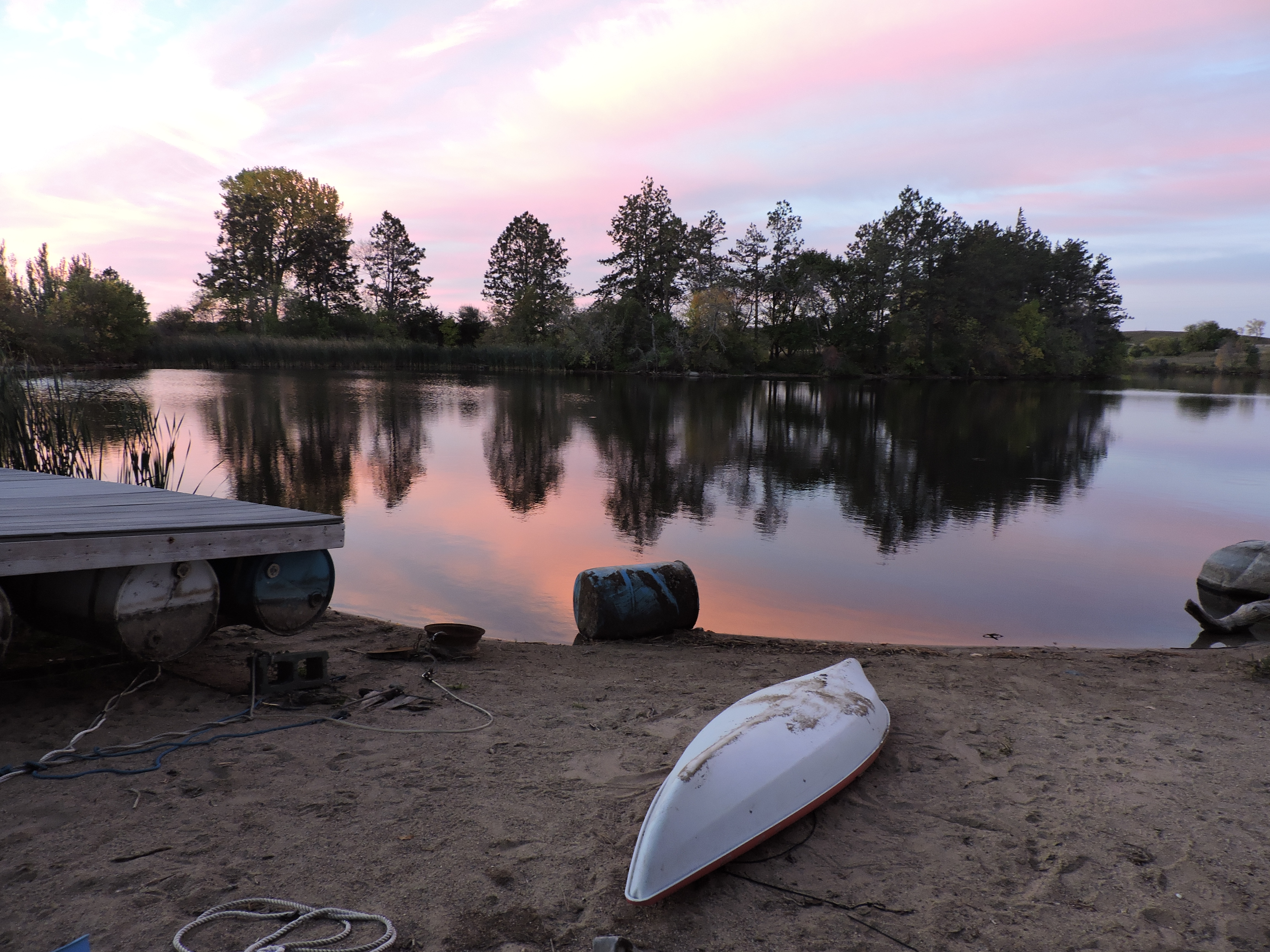
As I’ve gone on fishing over thirty years or so since Cortland, New York, I’ve found that a very wide range of species can be taken reliably from dirty water and often more than I’d expect to take from clear. At times, this requires no adjustment to lure presentation but sometimes you can up your odds with some minor adjustments. And as far as bait goes, fish can smell a bait such as worms or liver just as effectively in stained water and they can just as easily detect a struggling minnow.
When water is murky, a fish’s other senses begin to fill in for the range of vision that’s lost to the murk. Two senses that act in tandem as receptors of sound waves in the water are the fish’s lateral line and the inner ear. Low frequency, or more subtle sound waves are picked up by the lateral line while more intense, high cycles per second vibrations are picked up by the inner ear stones. The lateral line detects at greater distances sounds that the ears might miss. Both of these detect vibrations such as those a crayfish may make while scuttling around on rocks or a minnow may make while swimming. Especially wounded prey items tend to send off recognizable erratic patterns of vibration that will bring predatory fish in for a closer look.
But fish also have a taste sense and an olfactory sense that both operate a little differently than our own while remaining recognizable as taste and smell. Some fishes, such as catfish, have taste receptors across much of the body, so they’re actually tasting things in the water, such as your half-rotten shrimp, from a great distance. These buds are especially concentrated along the lateral ling and barbels, or “whiskers.” A fish’s nostrils, or nares, have a constant flow of water through these channels so that a fish is constantly smelling its surroundings as well, the same way that we’re always smelling the air. Using taste and smell jointly, fish can find lures and baits even at very great distances and even in murky to very dirty water. Catfish are probably the champions in this area and I probably don’t need to tell anyone to go ahead and fish for catfish in murky water.
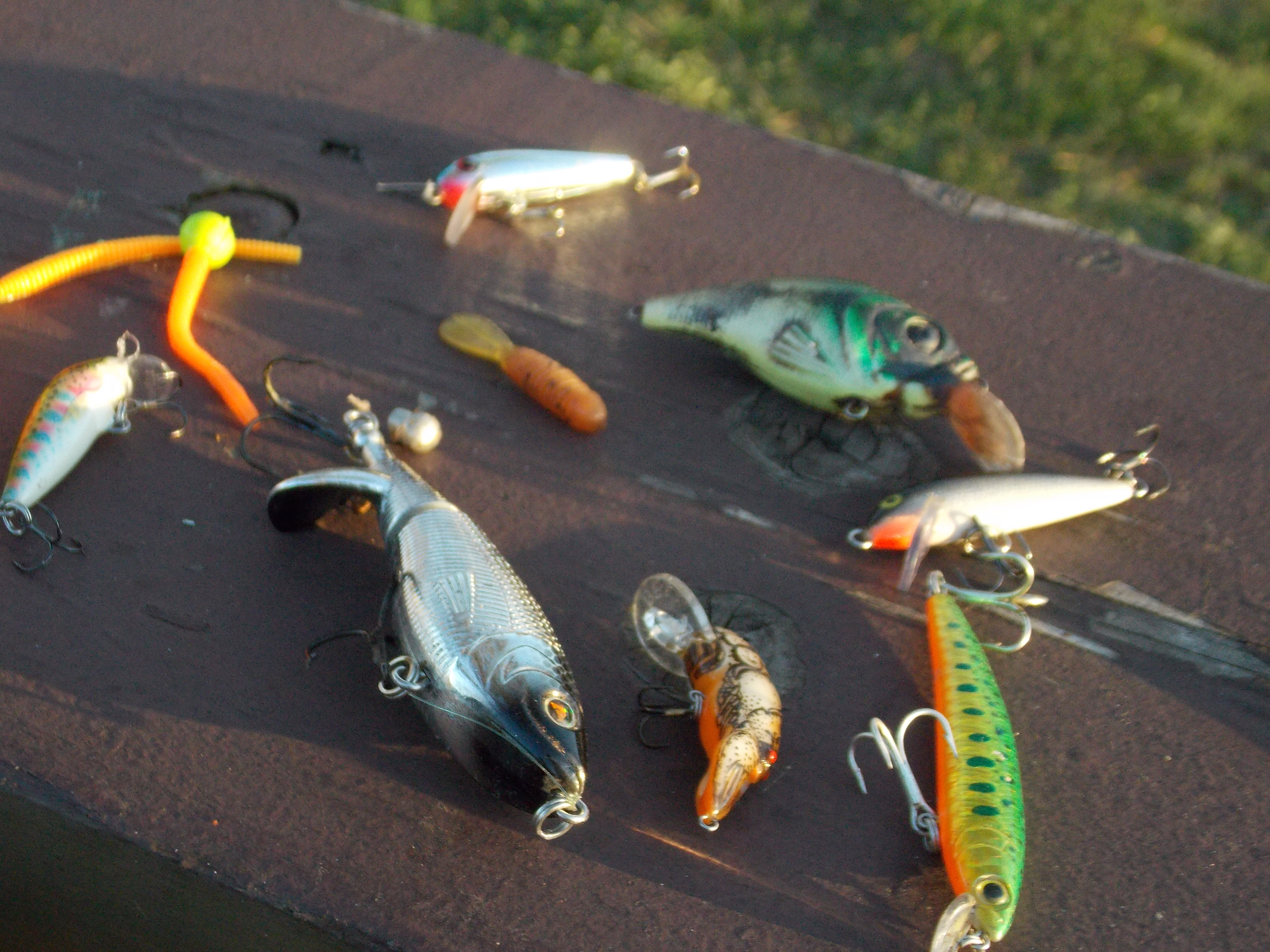
In clear water, I’m a fan of very natural presentations, often smaller lures in natural colors – things that aren’t more likely to spook the fish than to allure them. But in turbid water, I’m likely to put more effort into simply getting a fish’s attention. I’ll want something that sends off a solid vibration, something that’s easily homed in on by a fish that’s picked up the sound waves. And I’ll often depart natural colors for something more ostentatious, something to make the lure stand out from the brownish water it’s swimming in. I also may not retrieve as quickly, assuming that they won’t be getting as good a look at the lure or as long a look before reaching a decision about it.
Rattling lures become more helpful here and then too, something that pops, buzzes or otherwise makes a commotion on the surface can be the ticket. And do more with scent as well, making use of modern lure materials such as Gulp! or PowerBait. A spray-on scent can be a nice addition for any other lure as well.
And fish won’t necessarily hold in the same places in dirty flowing water than they would in clean flowing water. For one thing, if the dirty water comes along with a surge in current, as it often does, fish will be using the stream’s edges more – the flooded banks, especially if there’s a nice undercut channel. The best places to get out of the current will also be where the minnows are congregating so there’s an extra incentive for predators to seek out side channels and small bays that might ordinarily be above the water line. And don’t forget about inlet streams that enter the main creek or river you’re fishing. If these are not as badly flooded as the main stem, or these have fallen more quickly than the river, then they may be exactly where the fish are piling up. During flooding, the lower reaches of small tributary streams are ordinarily the first places I think of to fish, in fact. And if these smaller streams have even a little water clarity advantage, so much the better.
Another way to maximize your dirty water success: When creeks and rivers genuinely overflow their banks and turn the color of mud puddles but are flowing at approximately the rate of a waterfall, just wait a little (but not too much). My favorite muddy water situations involve flooding and then the day or two following the flood, when the water slows and clears just a little. Often the fish seem to binge on their favorite forage as soon as they can get at them again. Even if things still look quite muddy, it’s better than it was the day before. And if you’ve got a place that still has extremely muddy water but water that’s a little better adjacent, so much the better.
Here’s one additional tip concerning inlets to rivers and large creeks during times of flooding: Look for the mud line, a distinct border between water of one color (the river) and another color (the stream). Just what those colors are going to be depends on the particular waters involved. Here in Western Pennsylvania, I love to fish at a river mouth during flooding when the river’s still a violent surge of chocolate milk but the inlet creek’s a little more clear and greenish. The mouth of such a creek’s often just a little sheltered from the torrent as well. And right where the two waters meet, there’s often a distinct line weaving back and forth where waters of two different water colorations, velocities and temperatures meet. As often as not, there will be big fish feeding right here.
Through most of this little write-up, it’s probably been easy to picture black bass, crappie, catfish or maybe walleye involved in the high-water scenarios described. But the truth is that discolored water probably helps me the most with taking trout and particularly large trout. This last spring I missed a large wild brown that materialized from the middle of a flooded pool in a place I’d never seen a large trout. I wasn’t expecting his assault on my black wooly bugger but probably should have been.
Trout are normally still feeding when the water grows murky. On rocky, high-gradient streams, muddiness only happens to a limited extent and may manifest as something closer to a chalky color in the water, probably lasting less than 24 hours. These somewhat-discolored situations are probably the best times to be on such streams, especially if you’d like to find the largest trout – the ones that have been waiting out an extended low-water period maybe, hunkered deep under a log or undercut bank. They will now sometimes appear with abandon, chasing minnows, or your streamer fly, from across the pool. This is so predictable, and I’m so spoiled with ample fine water here in Pennsylvania, that I’ll sometimes stay home on fine, warm, low-water days and wait for my next drizzly high-water opportunity. I also find that, somehow, higher, muddier water gives me a chance to throw big bugs (or big minnows) that might normally spook trout. Now, they rush to be the first to clamp jaws on it, before it rushes down and around the bend.
Among the best demonstrations of the value of high, discolored water is the situation of steelhead trout, though here I’ll confine myself to the steelhead trout of Pennsylvania – the only ones I know. Maybe the situation’s different elsewhere. But here in Pennsylvania, it’s common knowledge that when the water rises, these migratory fish start moving upstream from Lake Erie into its Erie County tributaries. Still, it seems that there are many fishermen who wait for the water to clear before beginning pursuit of these kingly sportfish, feeling a need to see them before placing an egg imitation, perhaps, in front of their noses. But here again, I’ve done my best work in situations where I never see the fish before hooking up. Granted, I fish some of the smallest waters with steelhead runs so it’s a little easier to pinpoint the places the fish are going to lie. I fish brightly colored salmon eggs or egg imitations and the fish never seem to have trouble spotting these baits/flies. And maybe I’m simply addicted to seeing the float take a dive in the middle of a silty pool showing no sign of life before that decisive jolt.
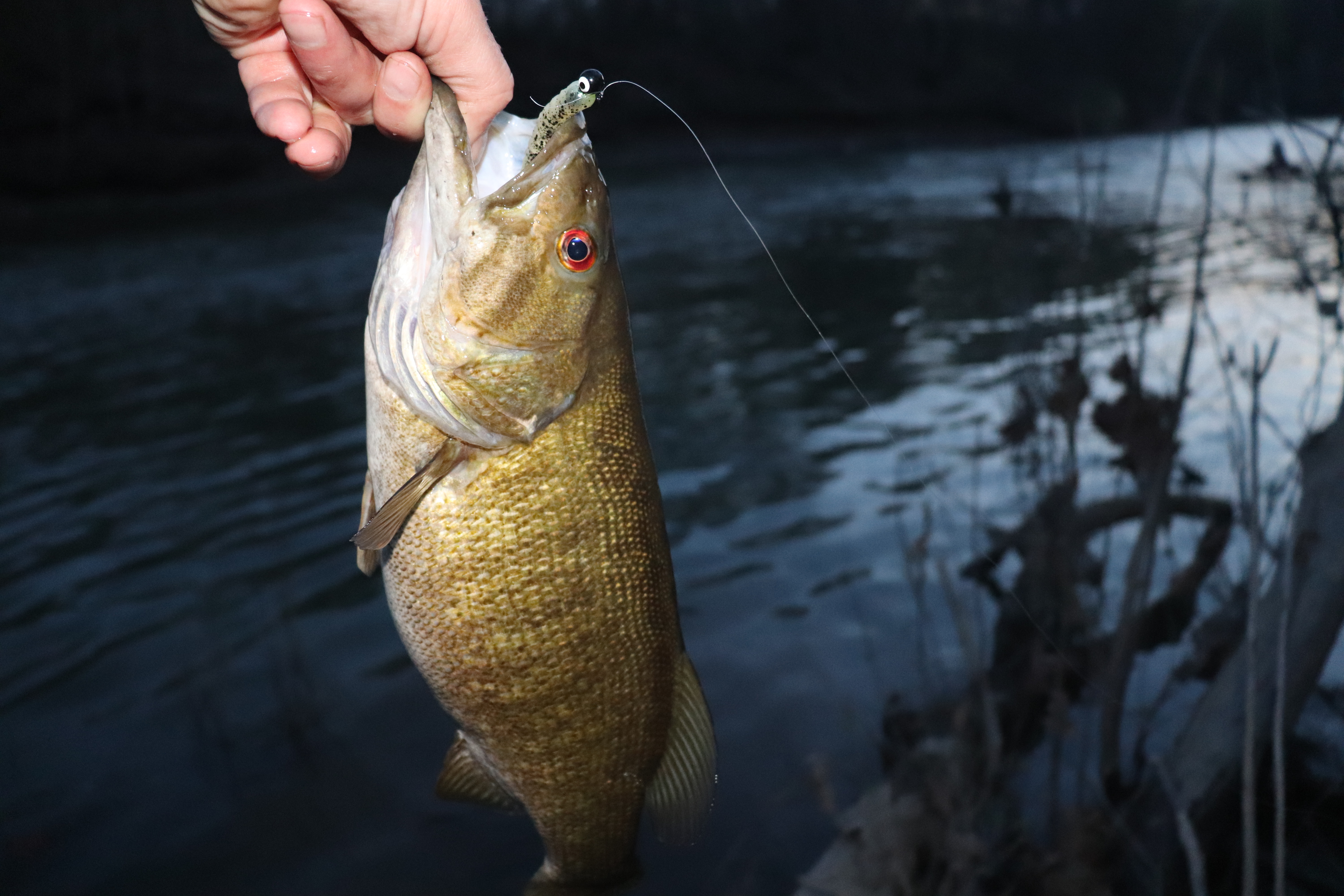
A couple of days ago I floated miles of the Conemaugh River on my fishing float tube. Predictably, the water was murky as I started down, but I wanted it no other way. I would find the smallmouth bass and the bass would find my pulsating lures. With legs and swim fins somewhere down in the murk below the tube, I tried not to think about the couple of alligators that were found in this river last year, or the musky, gar or really big snapping turtles. And as it turned out, I enjoyed a really find all-day float to my take-out point and enjoyed the acrobatics of willing smallmouth all along the way. And the only musky I encountered stayed away from may bare legs, making the drag screech for a few seconds before all went calm and the six pound line drifted gently back toward me on the muddy surface.


This short account may not have delved into every silty situation in your neck of the woods. I just hope I’ve done more to elucidate than to muddy the waters.

 Woodrise