Again this year, Susan and I ventured west during the month of October and spent almost the entirety of that month away from home. The trip had something to do with simple wanderlust, I guess, but also served a purpose in terms of the book I’m still working on which recounts my 2021 walk across America. But before leaving home, I was taken with a new and unexpected inspiration…
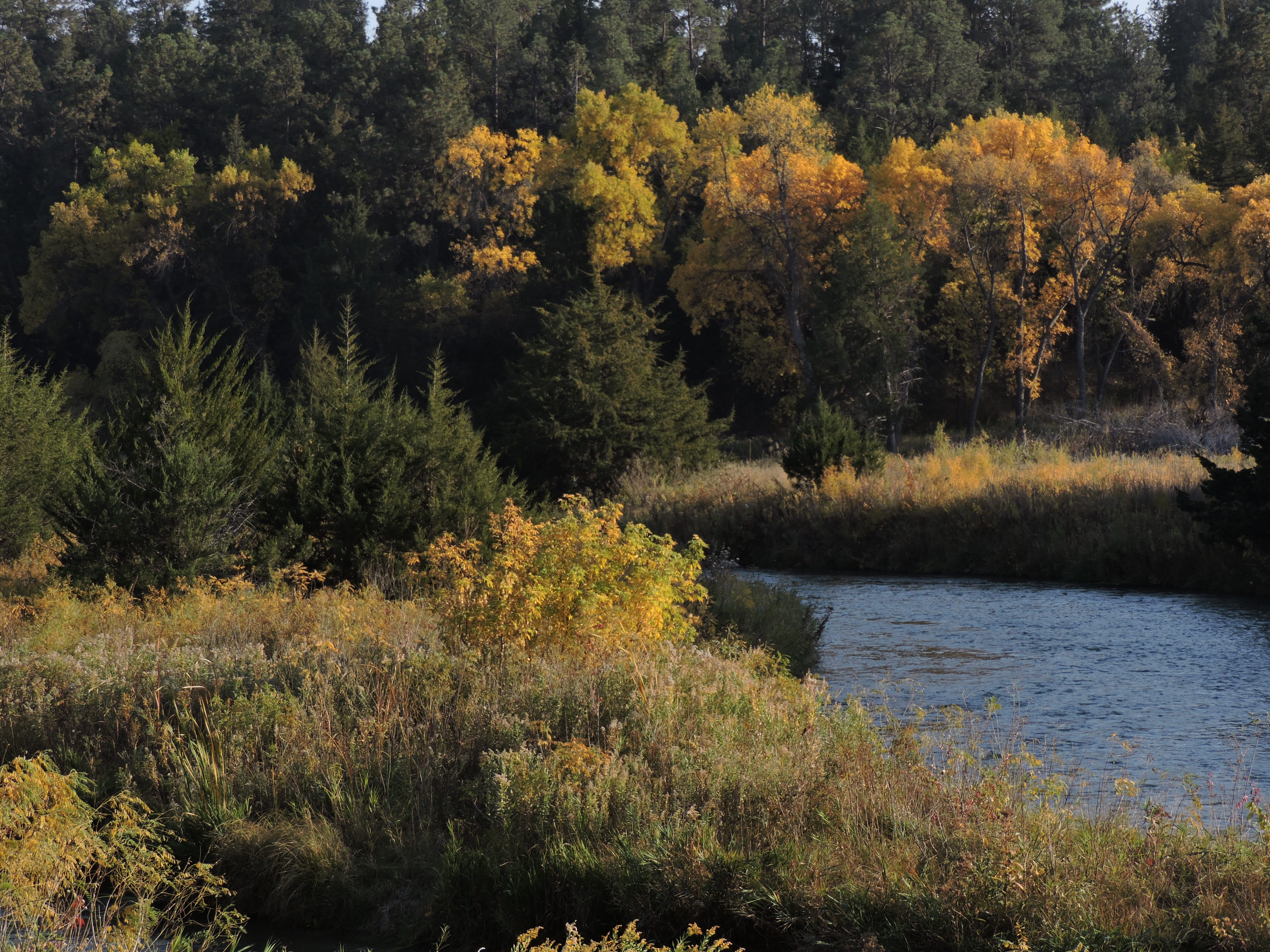
Don’t ask me how I started thinking about agates, of all things. These rocks are utterly foreign to me. In fact, rocks overall are something I’ve paid little attention to in recent years. We simply don’t have agates in southwestern Pennsylvania, to the best of my knowledge. I’ve only ever seen pictures of the captivating concentric bands of color revealed within these outwardly unremarkable stones. I just decided that while out west, we should get some of these, if at all possible, and learn something about them along the way.
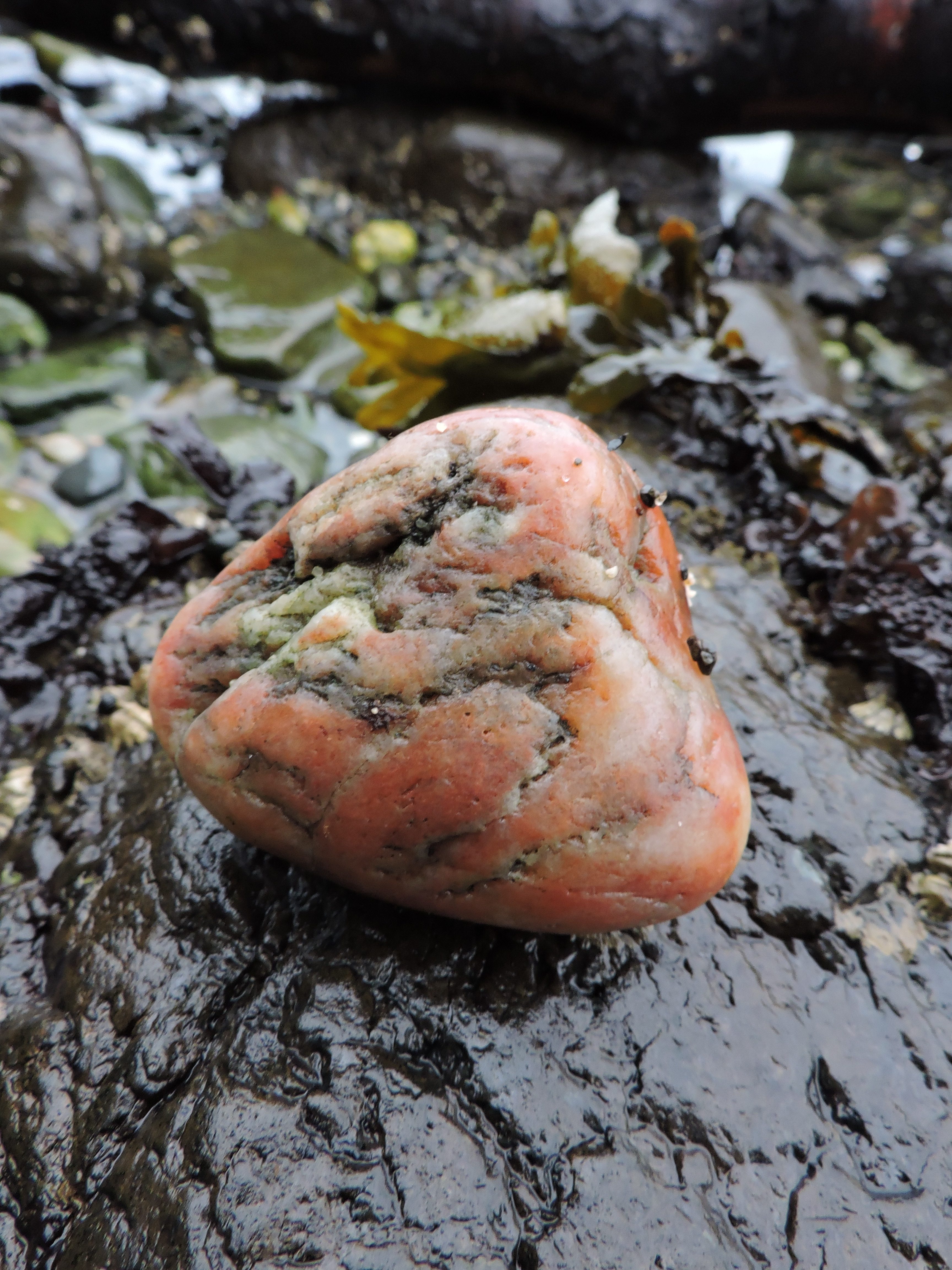
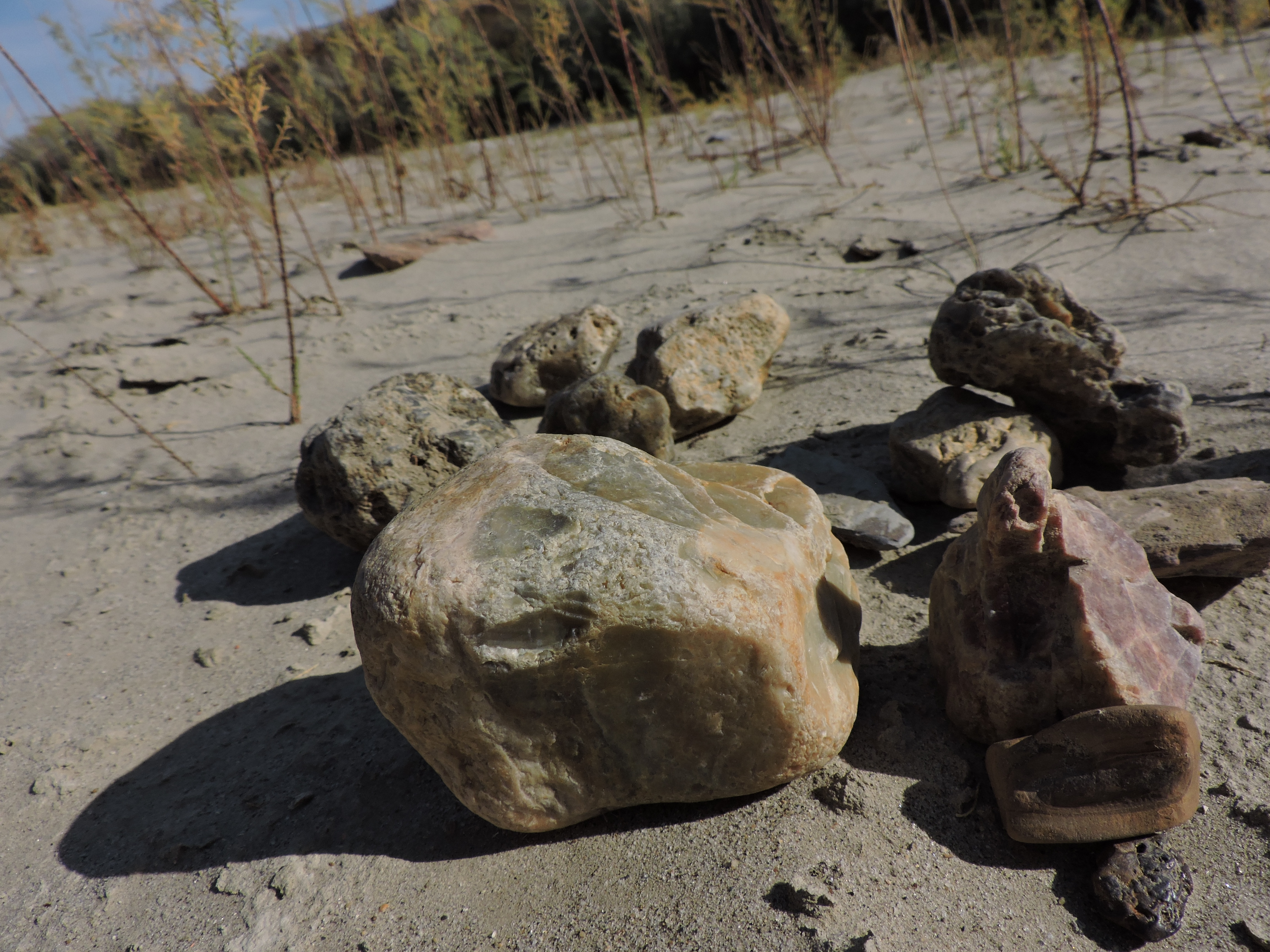
And it’s not entirely unprecedented, I guess. Throughout life, I’ve gone on little “rock binges” from time to time, deviating from my studies of the living world around me. And so, just a few weeks before departing for the west, I began to read on agates and to simply watch online videos about agate hunting, classifying and cutting. I became engrossed as I realized that agates, of many varieties, could be found all over the west and that it was probable Susan and I could in fact find these.
And so, on October sixth, we headed west across the Ohio River and the state of Ohio. Indiana and Illinois were traversed quickly as well and the evening of the second day was spent in Iowa. In the rock beds outside of a Hardee’s restaurant, I picked up a couple of stones I believed to be jasper, a close relative of agate and a sign that we were on the right track, at least moving in the right direction.
Two days later, we crossed the Missouri River into Nebraska, a state that neither Susan nor I had seen before. The Nebraska sandhill country was breathtaking in October and we were immediately glad we’d come this way. Again, in gas station and restaurant rock beds, I found jasper.
Late that afternoon, we deviated from the highway for a long drive south through the fields on increasingly obscure roads. Eventually, we descend steeply downhill in the arid treeless land to the Niobrara River and began following a diminutive trace of a lane upstream. Though there had been almost no sign of habitation on the way in, there were more fences down here than we’d hoped and the river itself was higher than I’d hoped, obscuring the rock beds I’d hoped to examine. Here was the theory I was working on: the native bedrock of this portion of the Niobrara River Valley might not hold any agates at all. But the river flowed downstream from areas in the western part of the state likely to be rich in both agates and fossils and so I thought that the river gravels would have to contain some of these desirable things.
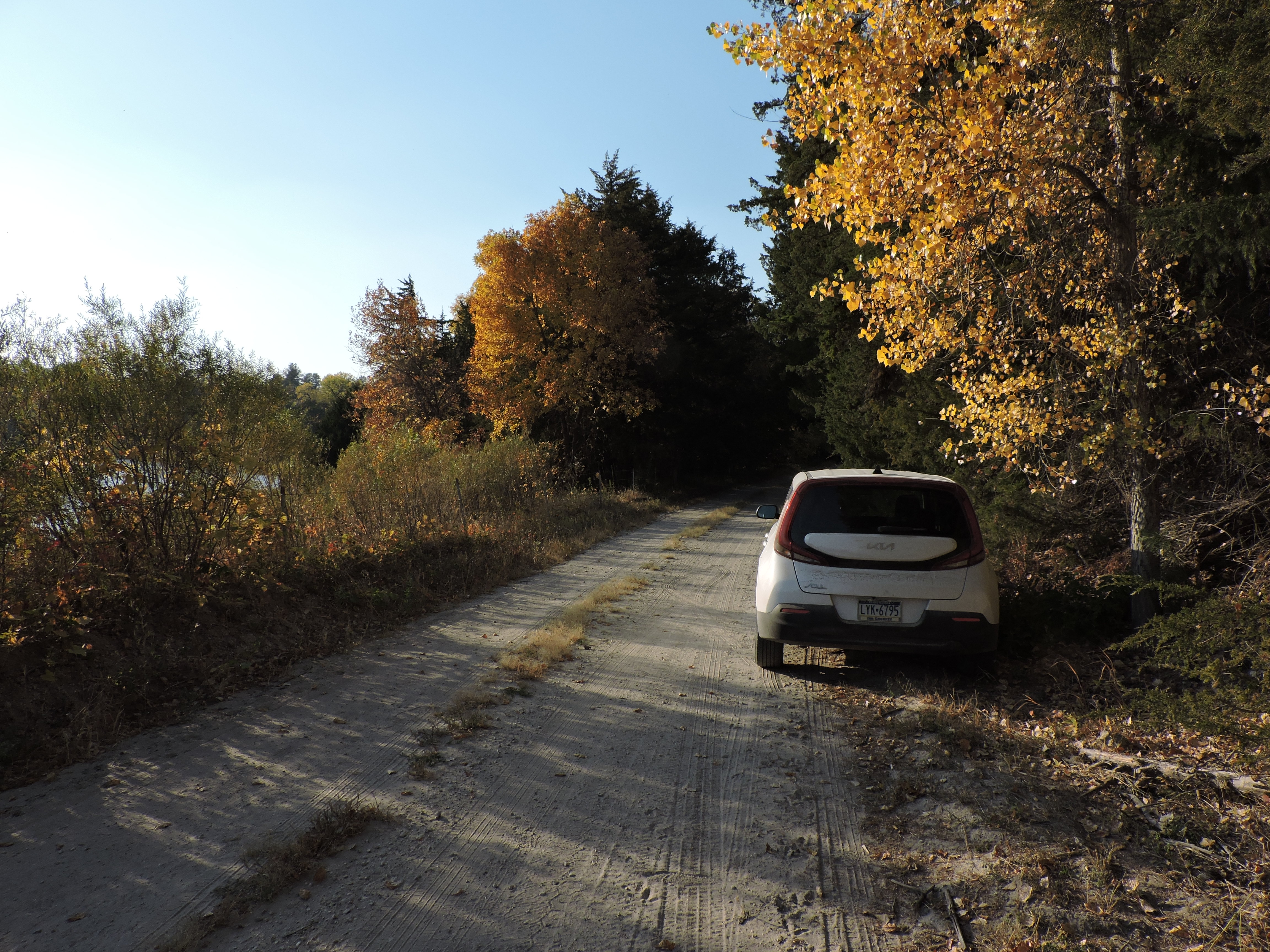
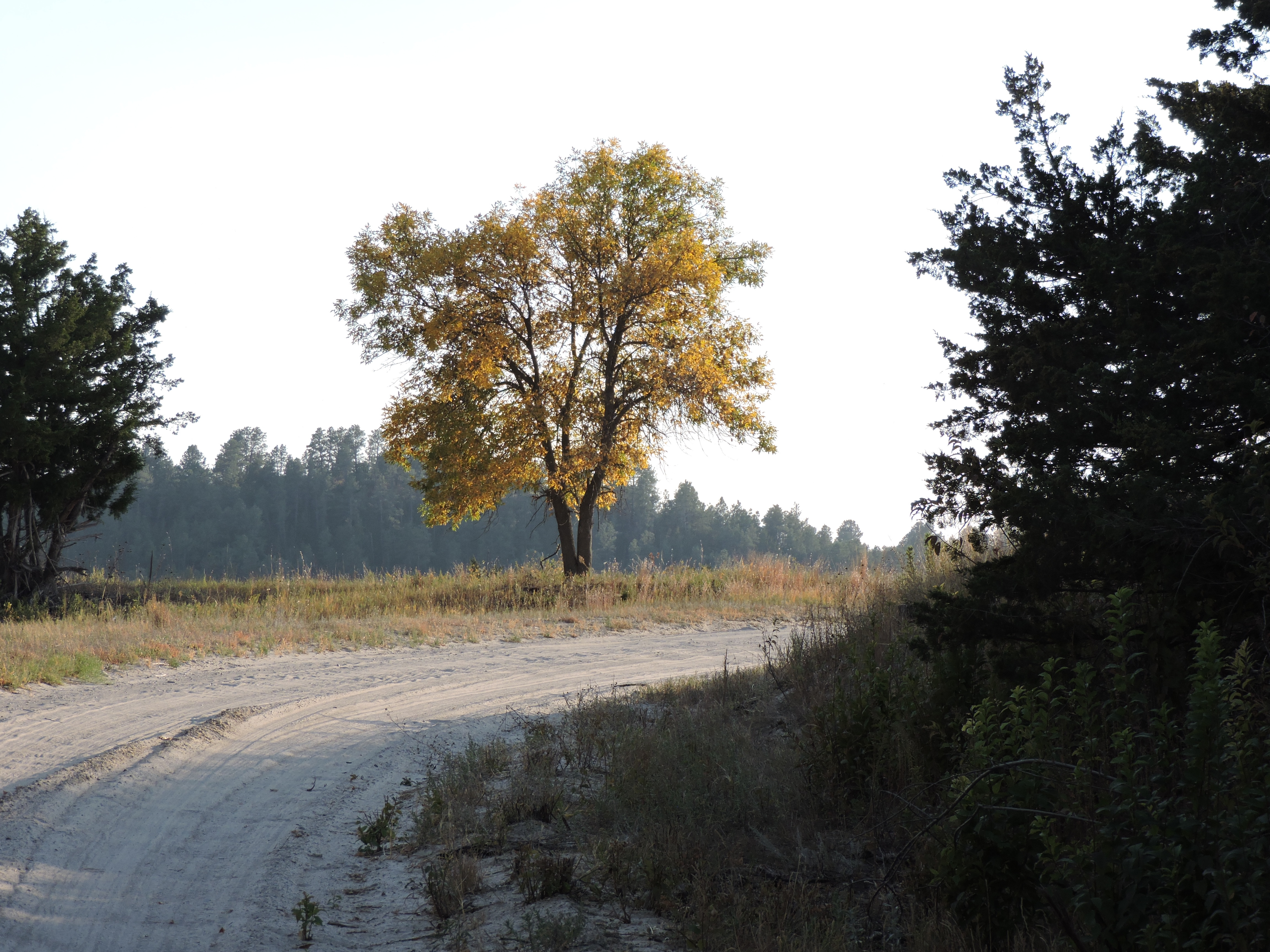
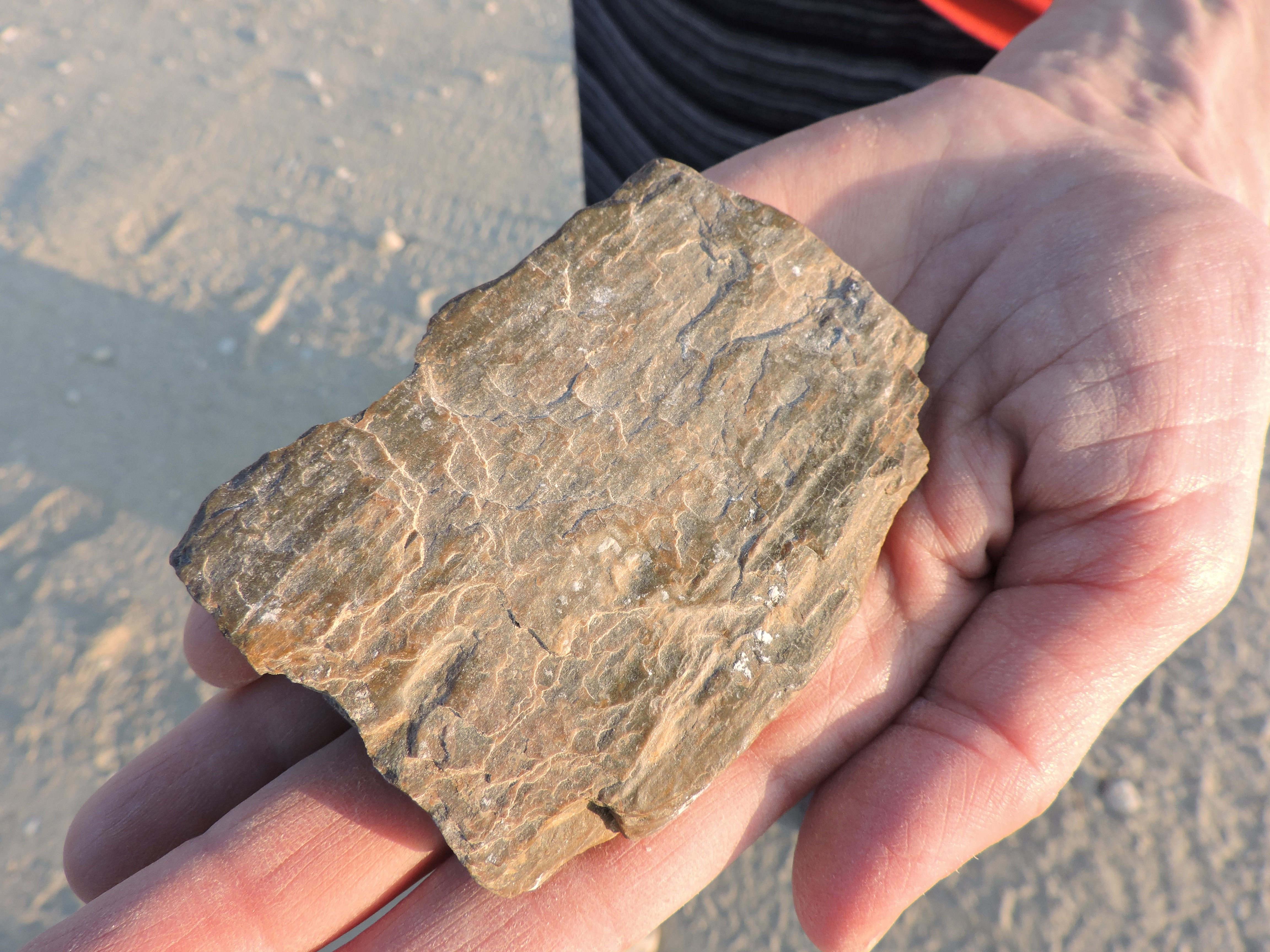
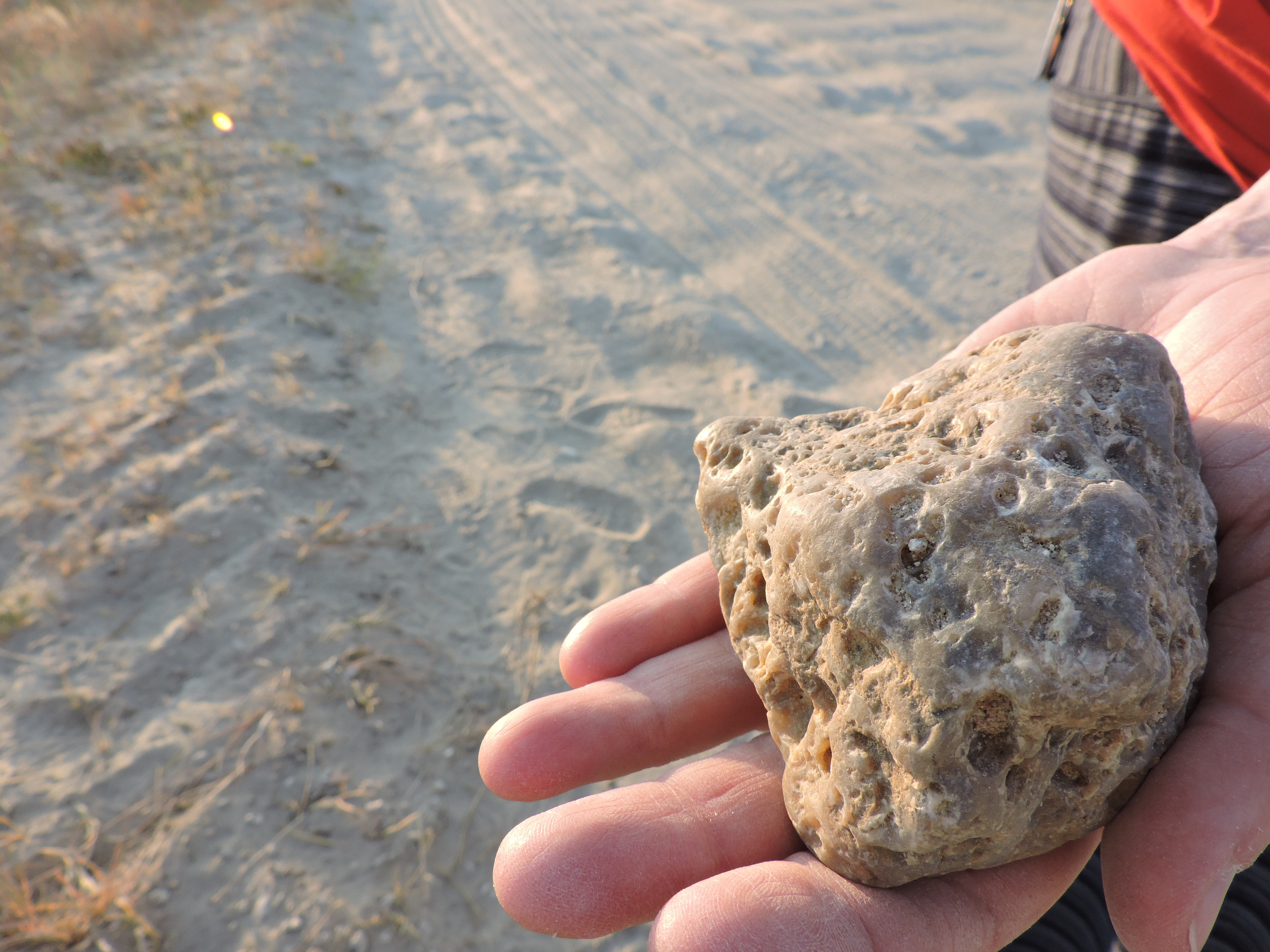
But a part of the picture as well was not only a search for present-day gravels of the river bed, it was also about imagining where alluvial (river-borne) materials might have been deposited 5,000, 10,000 or 20,000 years earlier. And so, we put on the brakes at a point in the sandy road high above the river, an unfenced place that looked like it might have been an inner bend of the river, a long, long time ago. Stepping out of the car, the long rays of stark evening light revealed rounded gravel, rather than sharp-edged stuff. This was the right kind of place.
Almost immediately, we both began to find jaspers. Jasper, like agate, is made of the mineral chalcedony, usually recognizable by its waxy feel – something tough to learn from videos or books. We have very few rocks that feel like this in western Pennsylvania. Susan wandered off in one direction and I in the other, stopping every minute or so to snatch up another likely specimen. We kept some jasper but what we were really looking for was translucence. Also, any hint of banding within the rock was a good sign. And, so, we found translucent and banded rocks as well and each filled little bags and then began carrying even more in our arms.
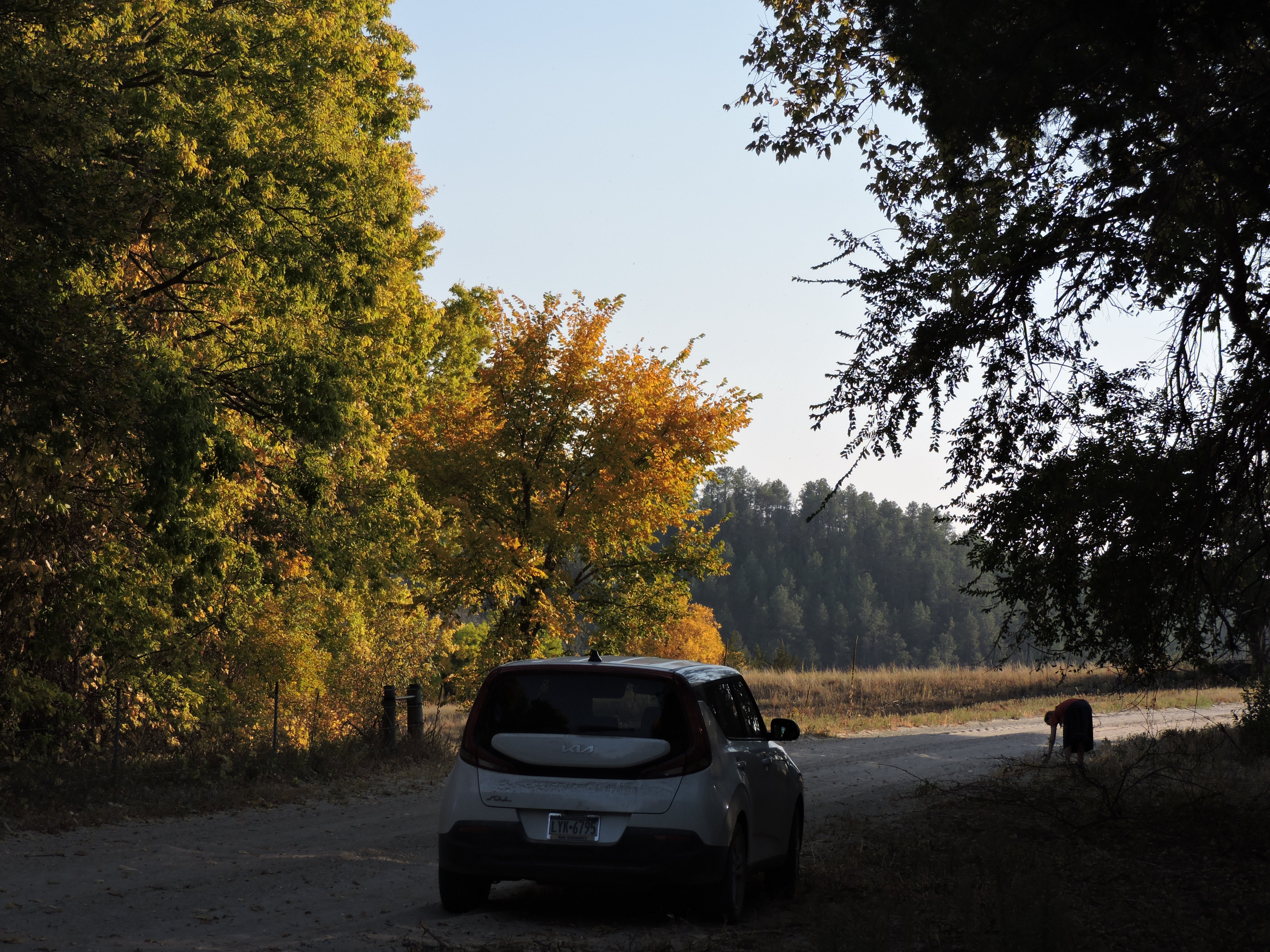
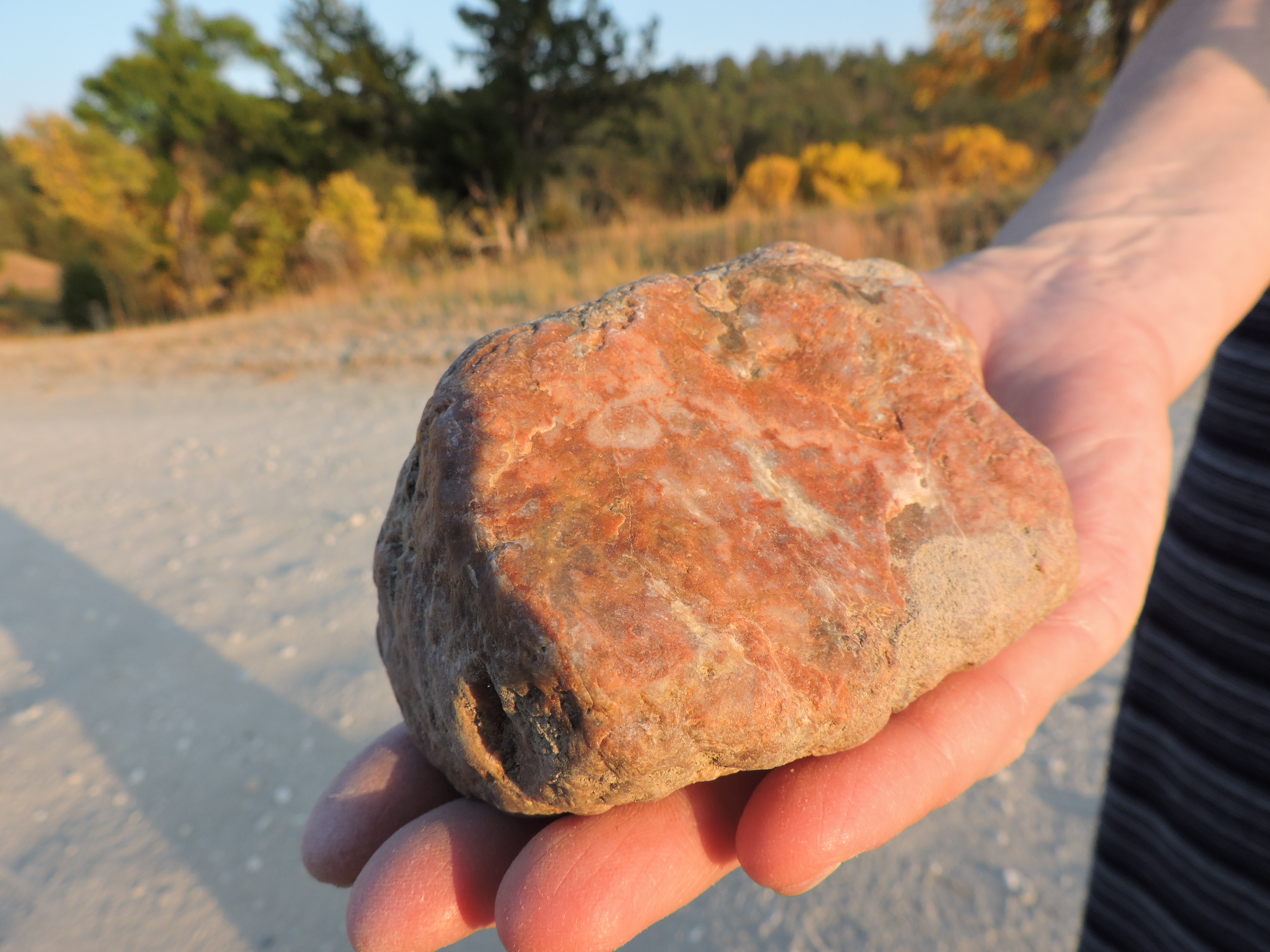
This was amazingly encouraging. At our first stop, it appeared that we’d immediately succeeded: we were on the agates and we were going to have something good to take home even if we didn’t pick up another rock. The pile in my arms grew so heavy that I set it down along the road to simply drive the car up to and load. But what if we didn’t stop finding agates over the next three and a half weeks? At this rate, where could we possibly stow our finds within the available voids of my Kia Soul?
We agreed to just stop looking as we made our way back to the car. But then Susan, in a lapse of self-control, stopped in the middle of the road, bent over and started to scratch at the point of a large rock mostly buried in the road gravel. She wouldn’t give up and over the next five minutes or so managed to excise a fat rock of maybe five or six inches long, exuding an orangey-reddish color and some translucence. We didn’t know it yet, but Susan had just found the finest Carnelian agate of the trip.
Not a bad start.
We visited Wounded Knee, South Dakota, the next morning where we met Eagle Hawk, a full-blooded Lakota Sioux who acted as kind of a guide to the site, cemetery and battlefield, though he was quick to point out that no-one among the Sioux described the events here as a “battle.” It had been a massacre. And if we were going to come all the way to Wounded Knee from our Pennsylvania home, it was good to have talked to an actual Lakota Indian while there.
We explored a portion of the Badlands with strange mushroom-like rock formations and walked around the rim of a coulee. It was mid-day though and so few animals were out and about, just a few mule deer and some unfamiliar birds. A badger would have been nice but I realized we might have to come through after dark for one of those.
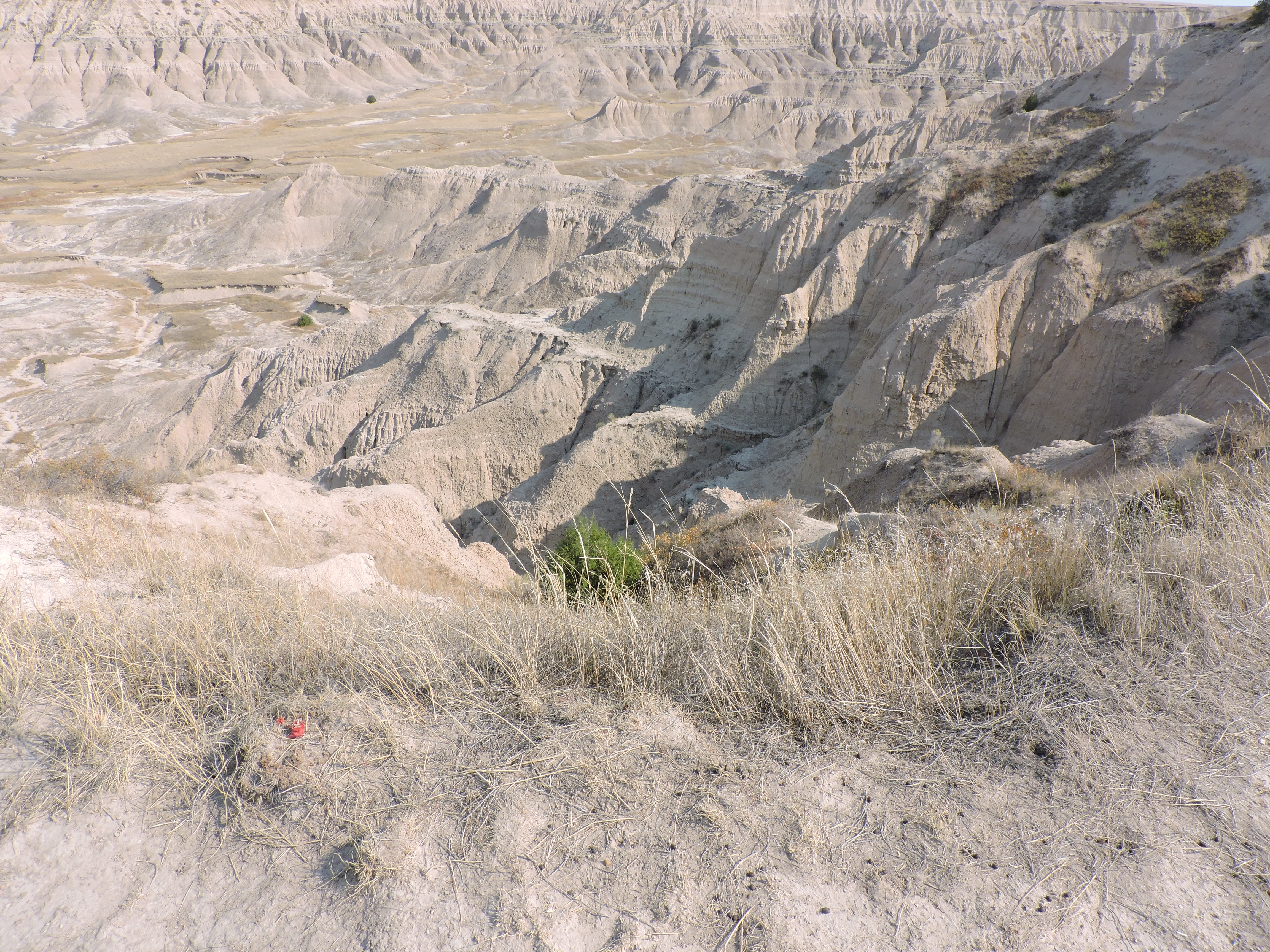
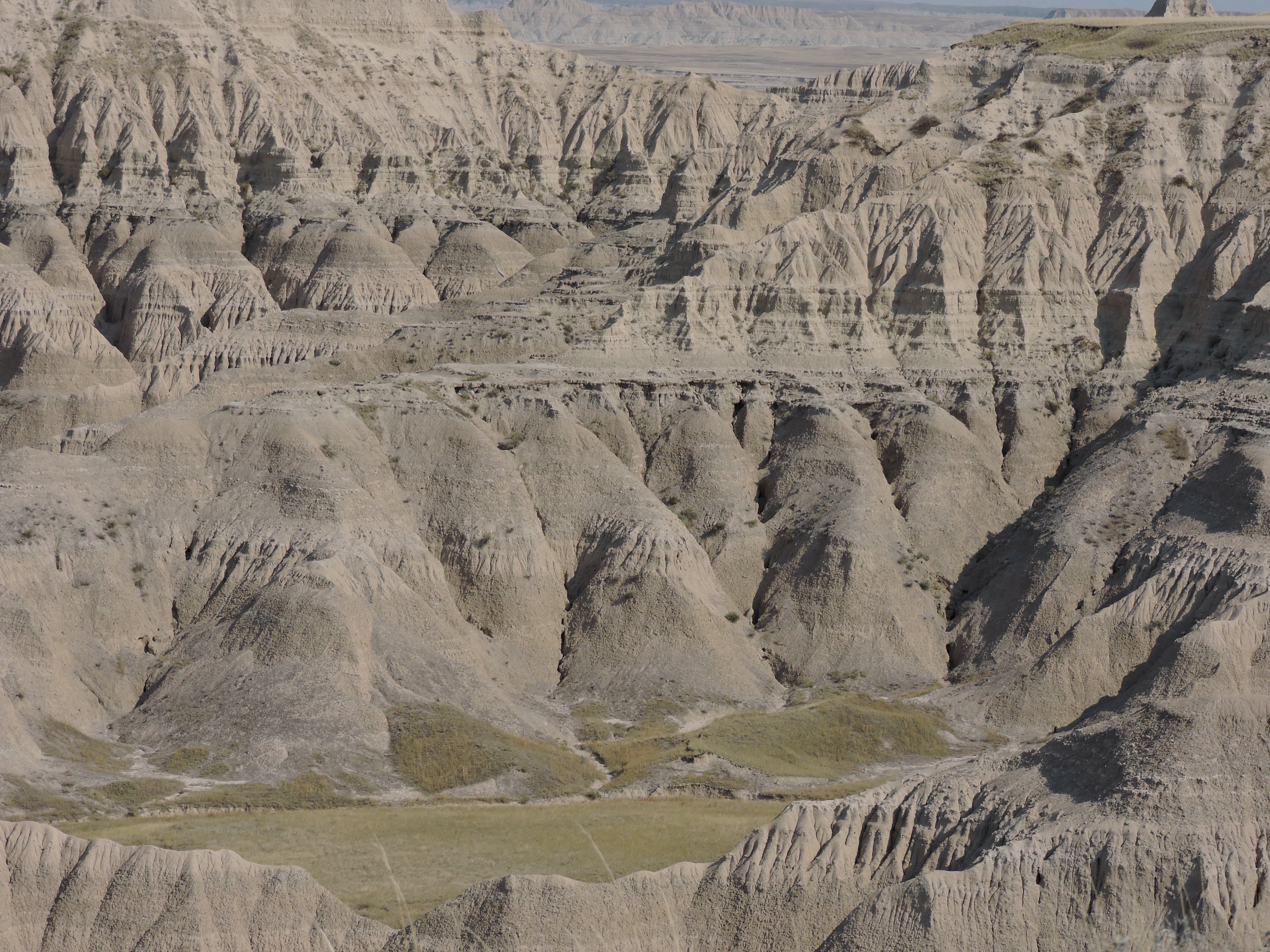
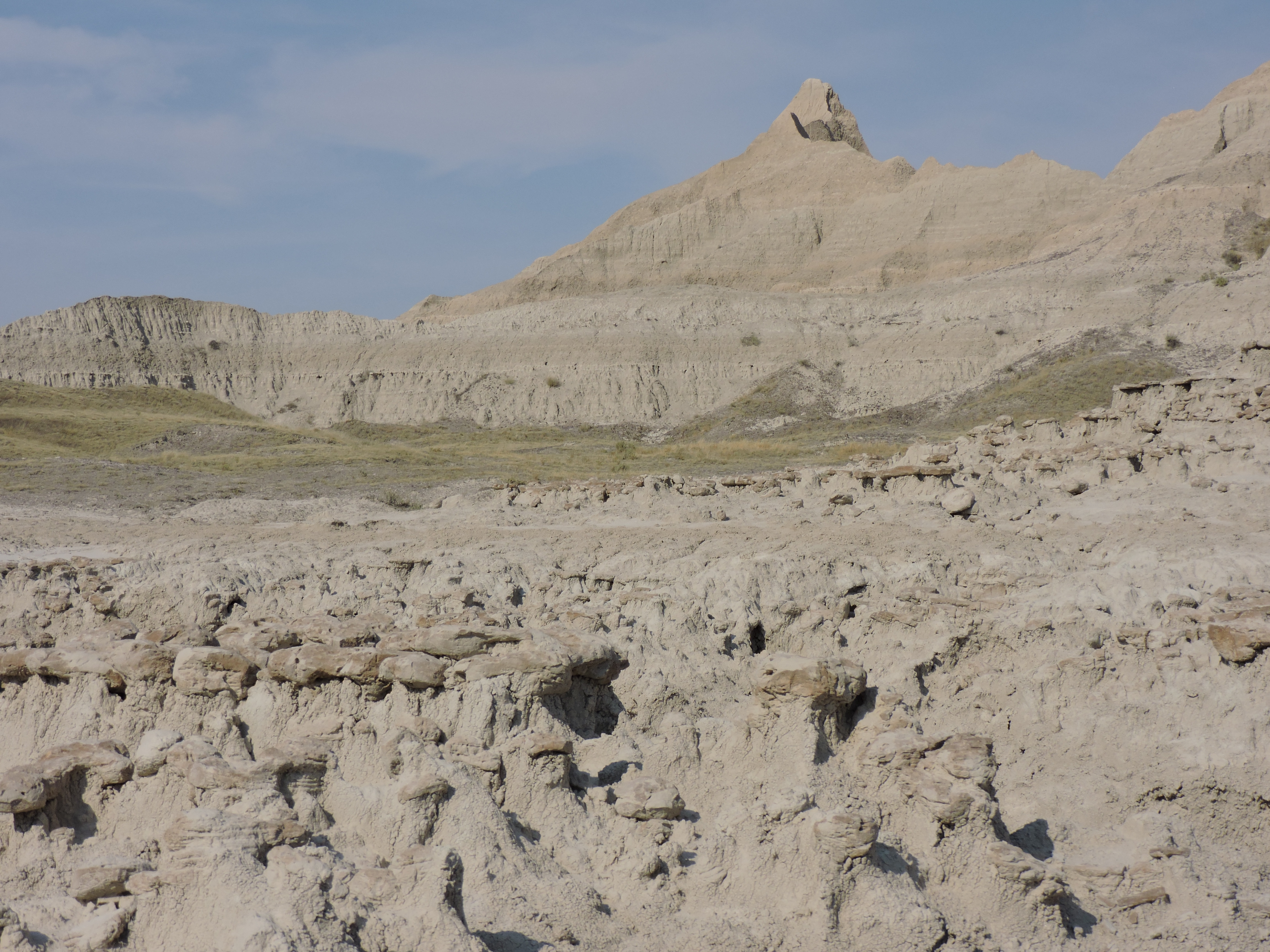
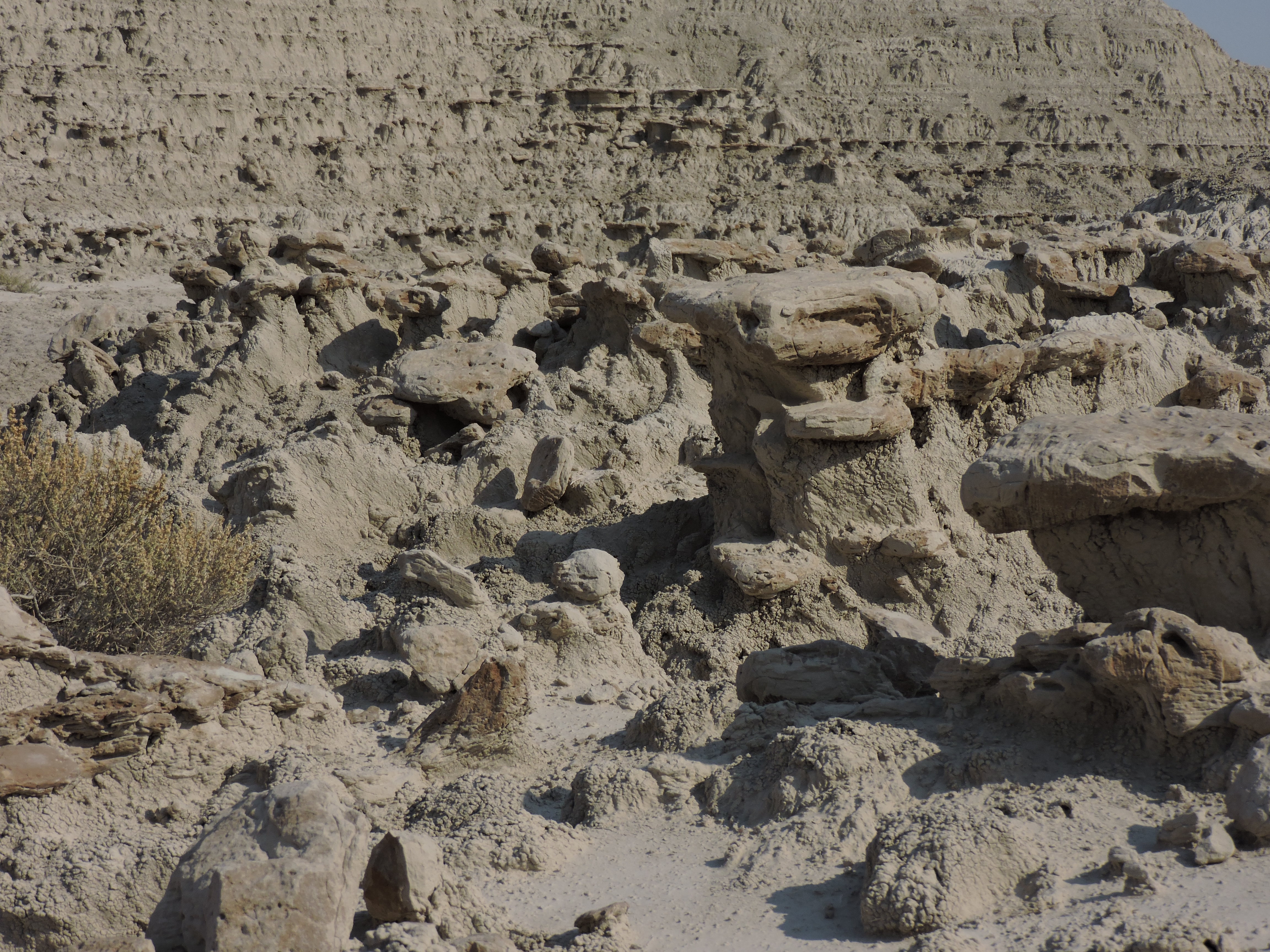
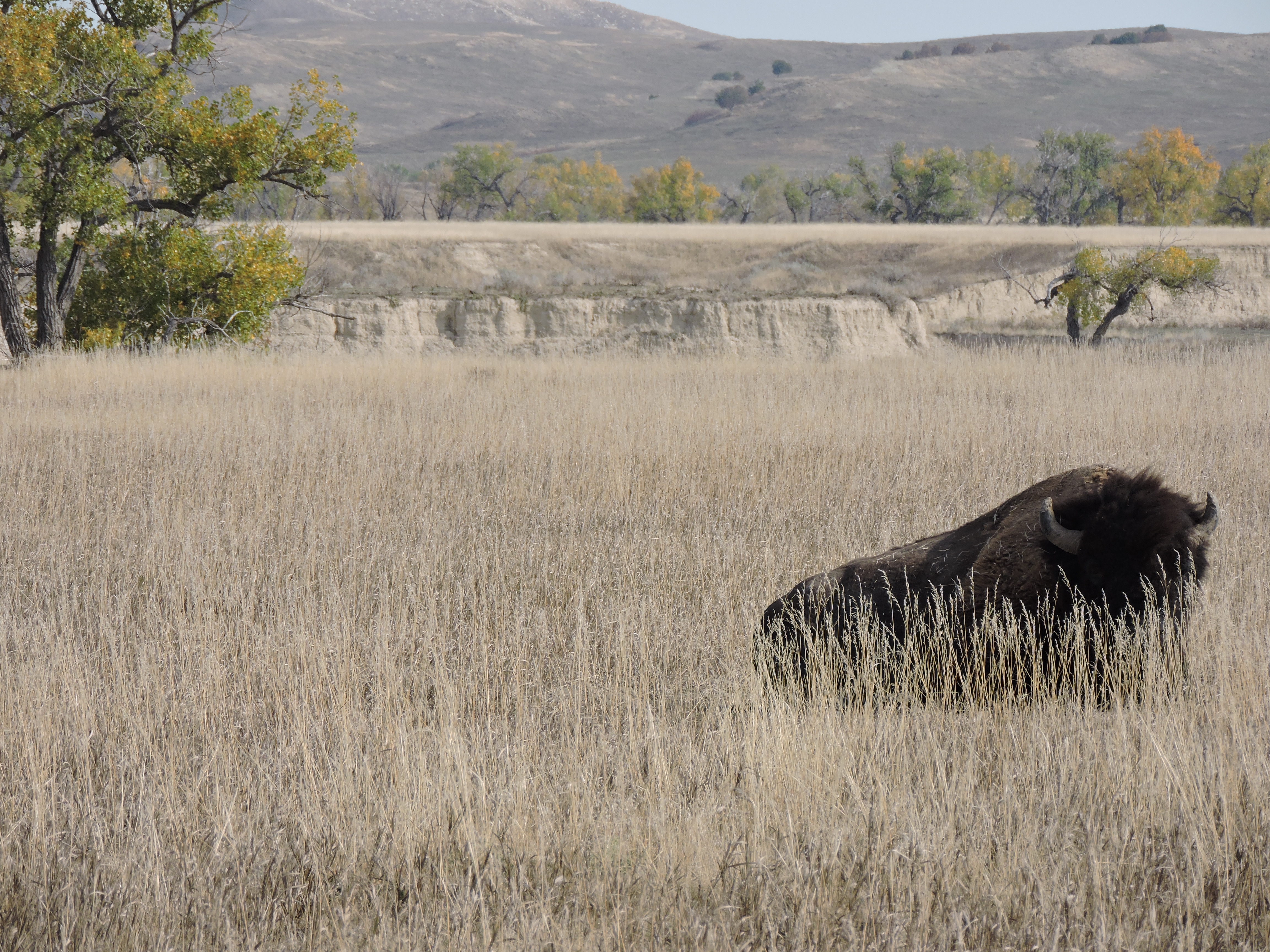
Moving on to the northeast, we were able to get fairly close to buffalo and then drove through an expansive prairie dog town. Here, there was an animal too large to be a prairie dog himself, running from one hole to the next, inspecting. It was a badger, looking for lunch! A first for Susan and the second live one I’d ever seen.
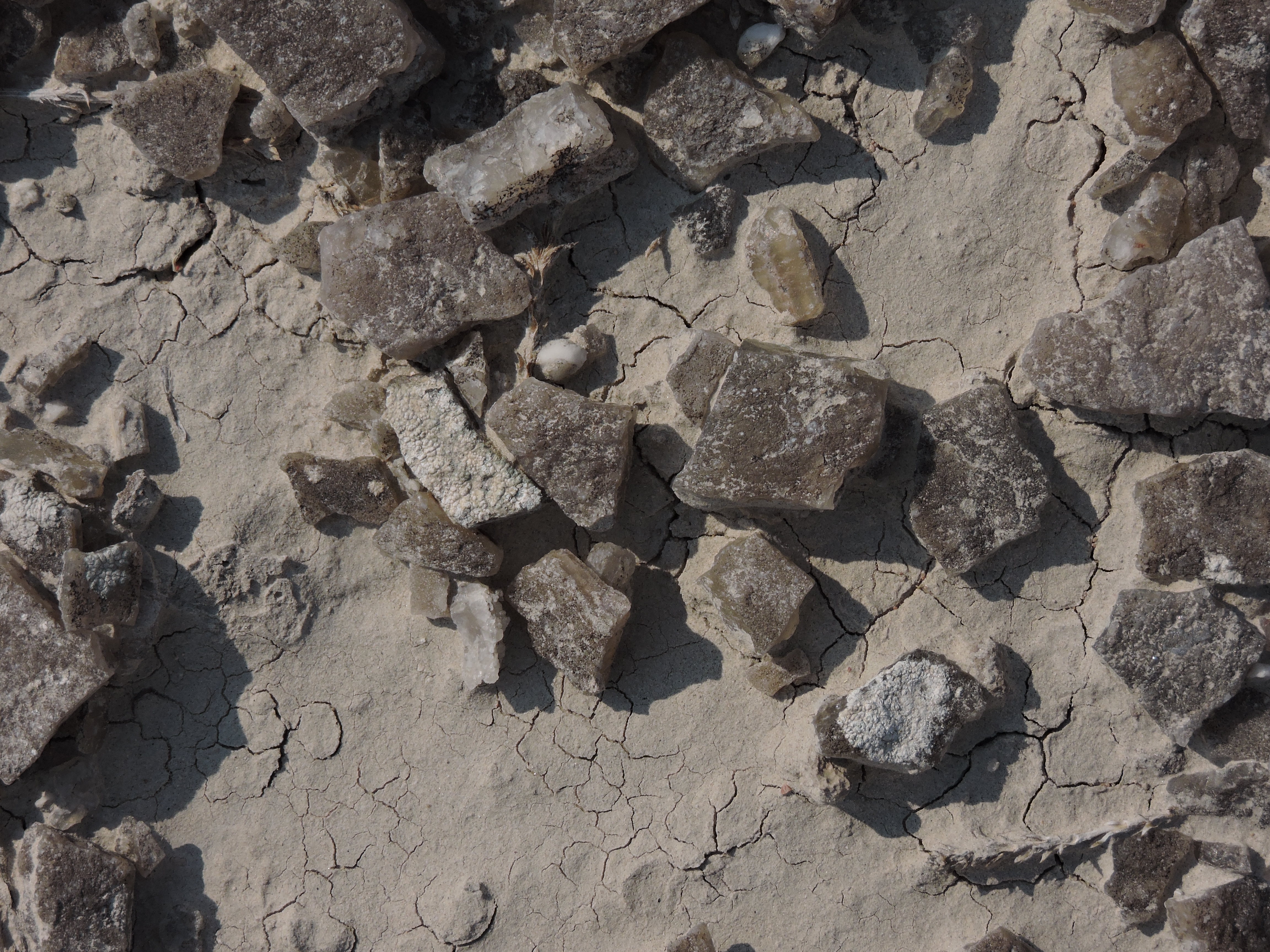
With the sun settling on the desert horizon, we found ourselves along the Cheyenne River, again looking at rocks, and again finding no shortage of agate candidates. This now seemed so easy. We found them in road beds, along rivers and popping out of eroding banks. They’d come in a wide variety of colors and in odd intergrades between jasper and agate. Some were almost opaque and others almost as clear as a lens. Some more weathered and rounded, others still jagged.
We moved on that night toward our hotel at Belle Fourche, SD, near the Wyoming line with a car already brimming with rocks. The expedition had proven a success. Agate hunting was actually incredibly easy! Too easy.
But in the weeks ahead, we’d go on to learn some more, a process that would temper our expectations. We didn’t realize yet that little of what we’d bundled into the trunk was real agate.


 Woodrise