When I started writing on the big fall trip west a few weeks ago, I didn’t anticipate running on quite this long. I didn’t think I was about to write a 4-part series. And the truth is, even with 4 parts, I’ve only glossed over the surface of all that was seen over those 4 weeks, all that was done, and all of the rocks stowed in my vehicle’s various orifices.
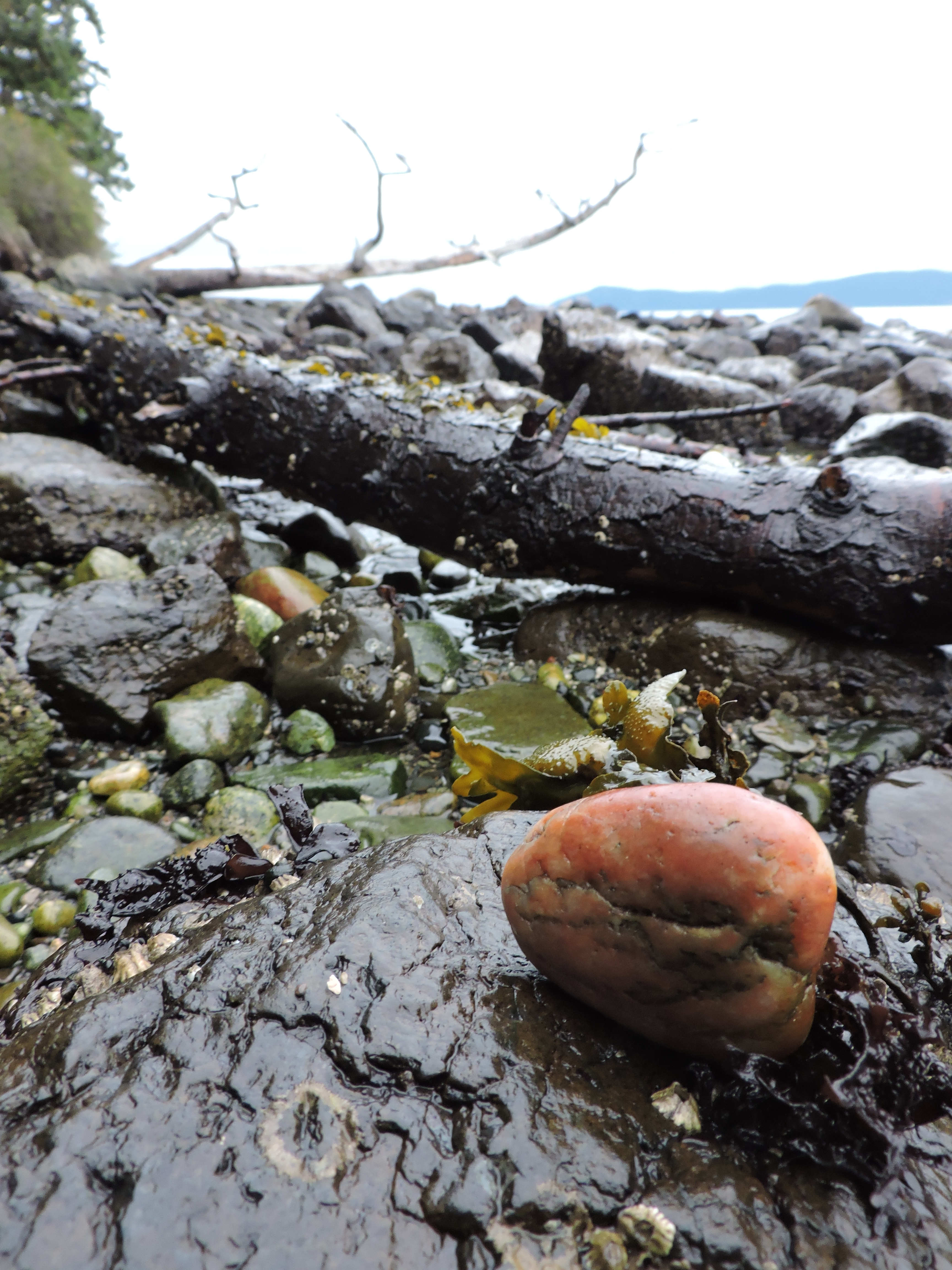


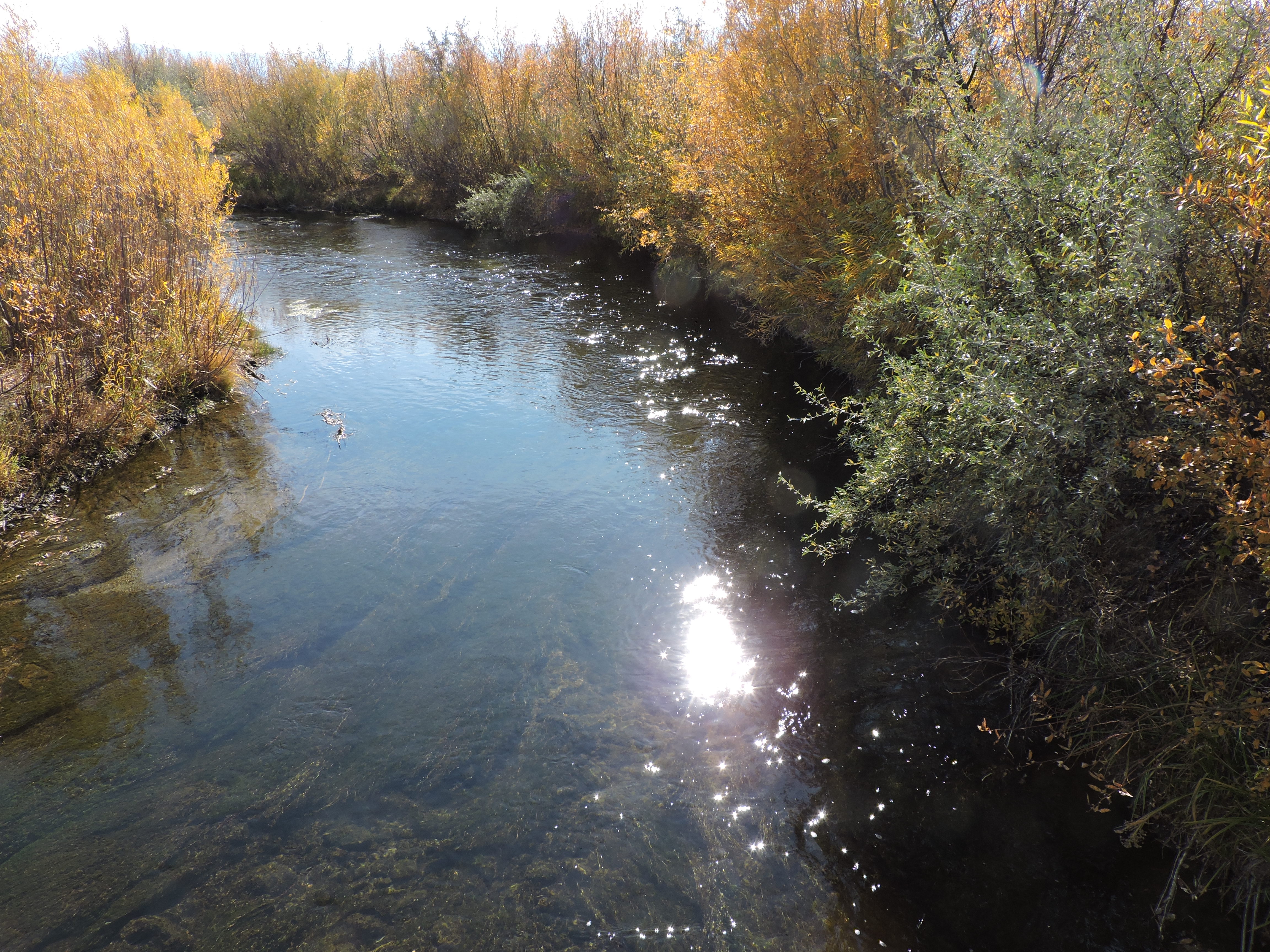


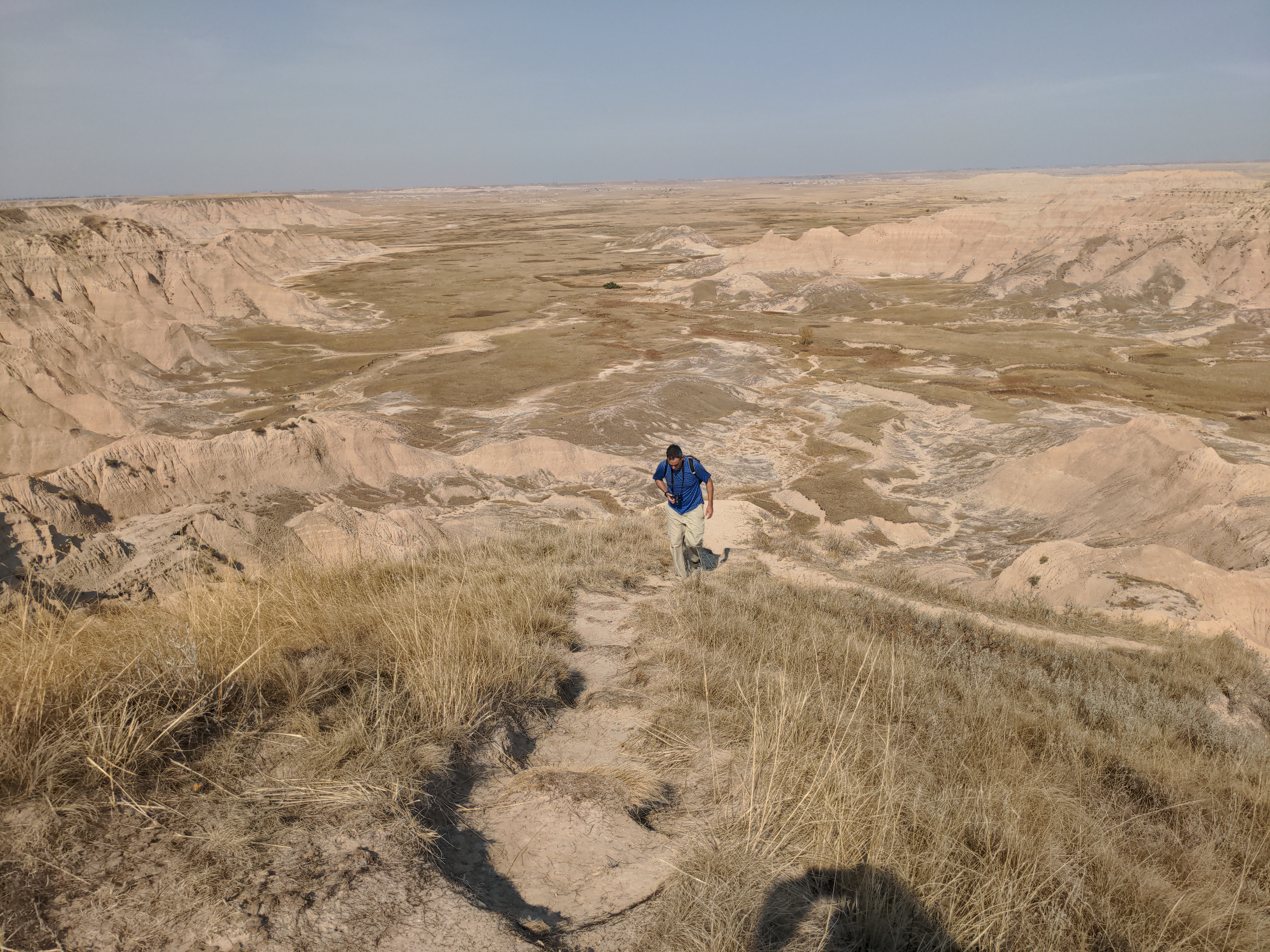
In parts One through Three I tried to describe 10 days of westward travel with plenty of stops for agates along the way or, I should say, potential agates. Nothing was certain – Susan and I were still new to all this. By the time we arrived in Washington State, we had colorful rocks of all descriptions, and in bulk quantities, stowed under the seats and taking up much of the back hatch. This was when we’d started looking for gold instead and found that our take of gold seemed much less space-intensive. Or mass intensive. Or weight intensive.
We arrived on the west coast, collected a few of what we thought might be carnelian agates and started the long trip back east, now moving at a more conservative speed and taking more time to simply look for rocks. This could only be good.
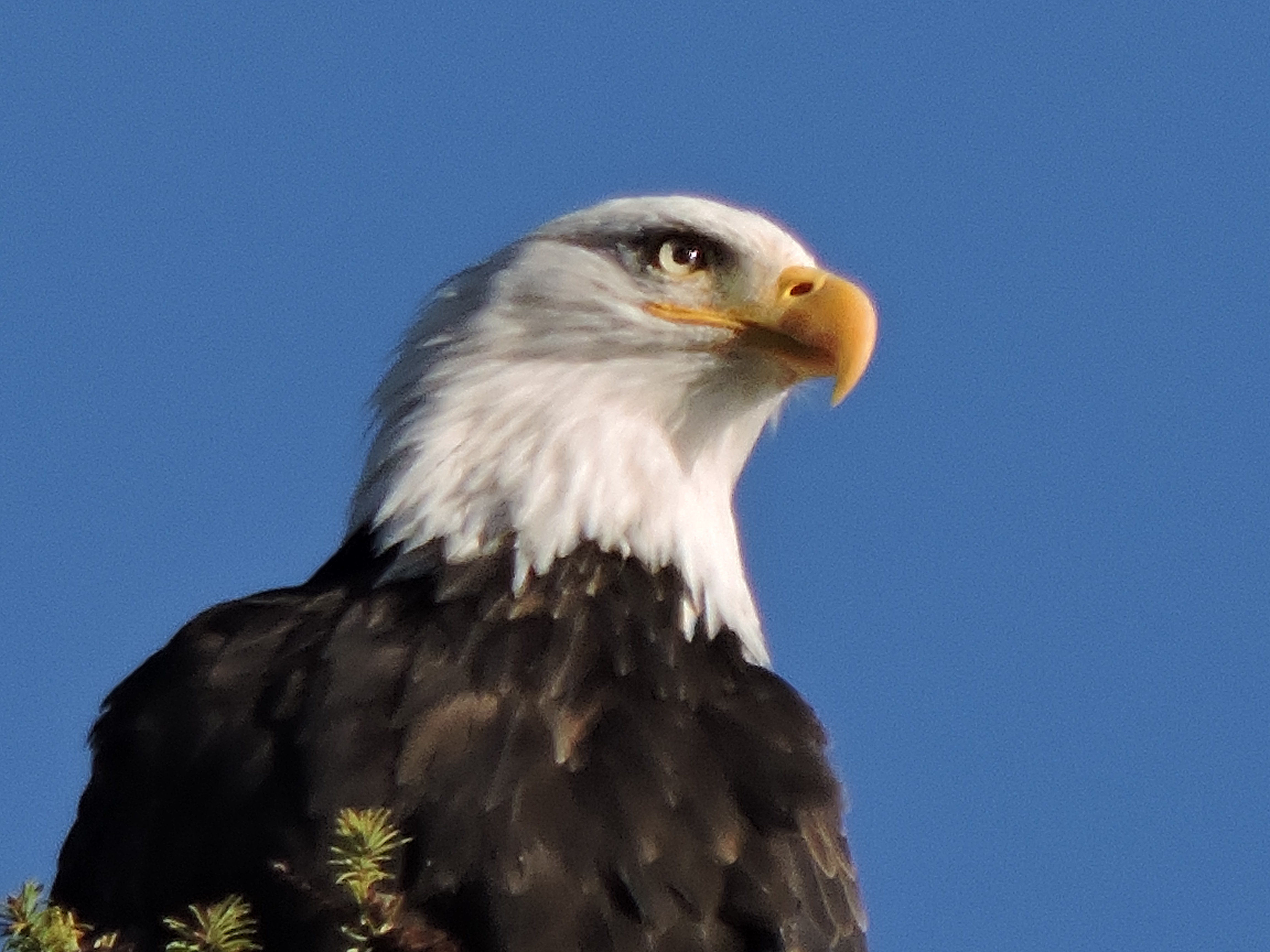


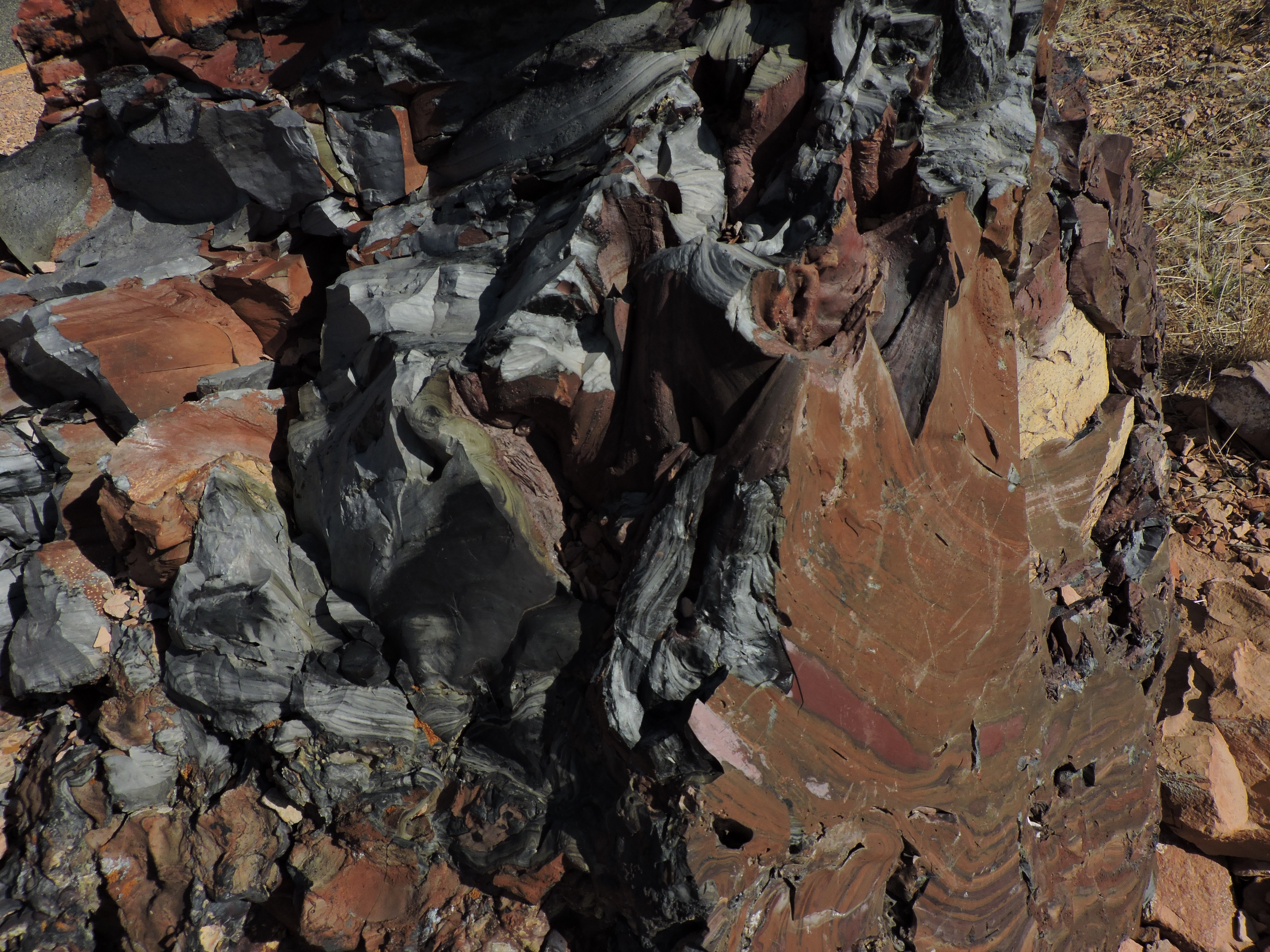
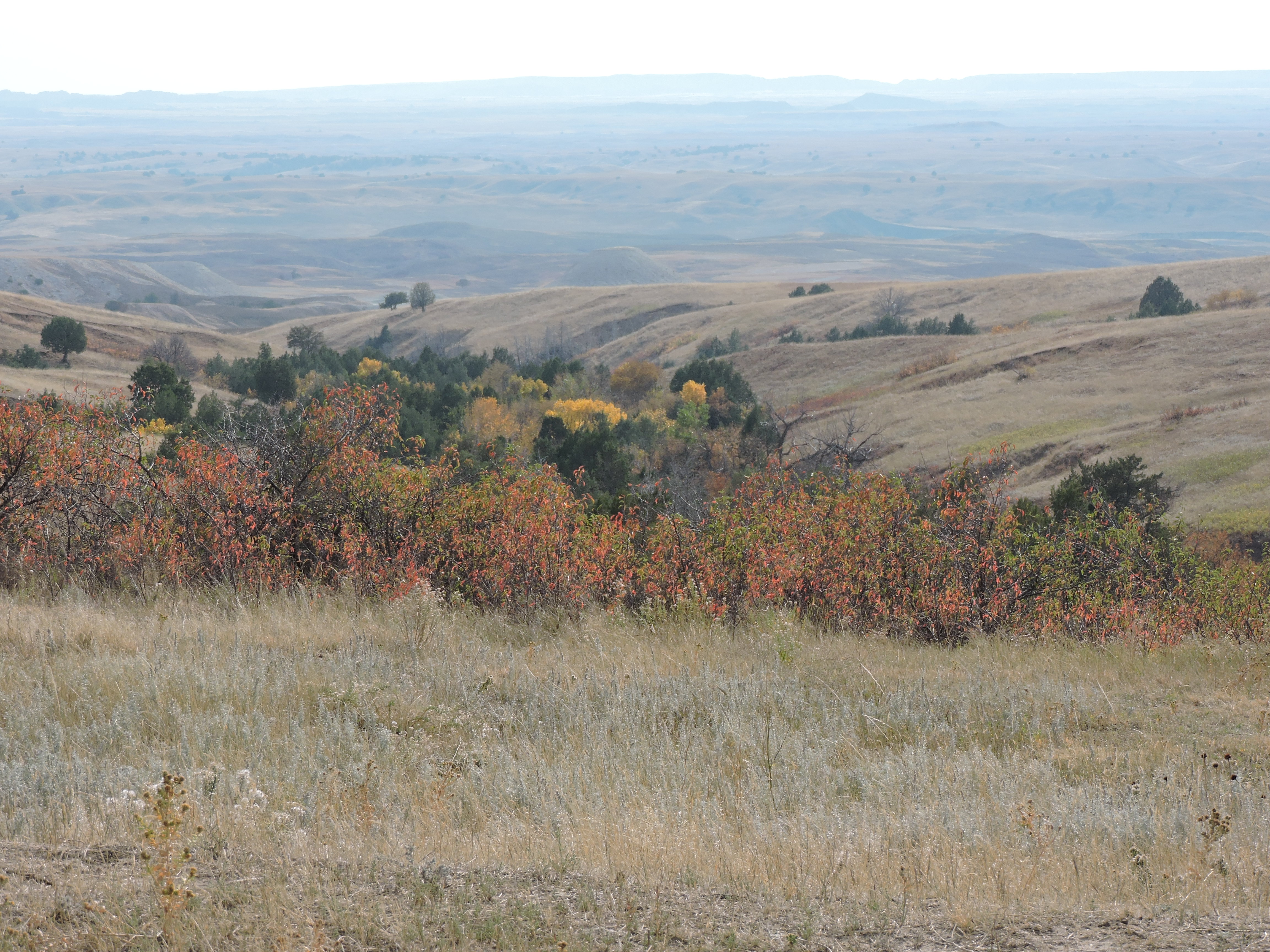

And there really just isn’t space or time to describe all we experienced in the rest of Washington State, in Idaho or Montana. We found more likely agates in rivers on both sides of the Cascades. We passed through the Wenatchee Gorge and Levenworth during Octoberfest. We searched an alluvial deposit of the Columbia River with much success. We moved on to the great coulees of the Channeled Scablands and looked at incredible and truly ancient rocks though agates proved scarce. Dry Falls, once the world’s largest waterfall, was a first for us. That night we were at an old favorite – the Ruby of Ponderay, Idaho, not a precious stone but a hotel.
We enjoyed our two days in Idaho very much but agates proved scarce as did gold. We hardly added to our rock pile and this was probably a good thing. And this isn’t to say that these precious prizes couldn’t be found in the Idaho panhandle; we just didn’t know where to find them.


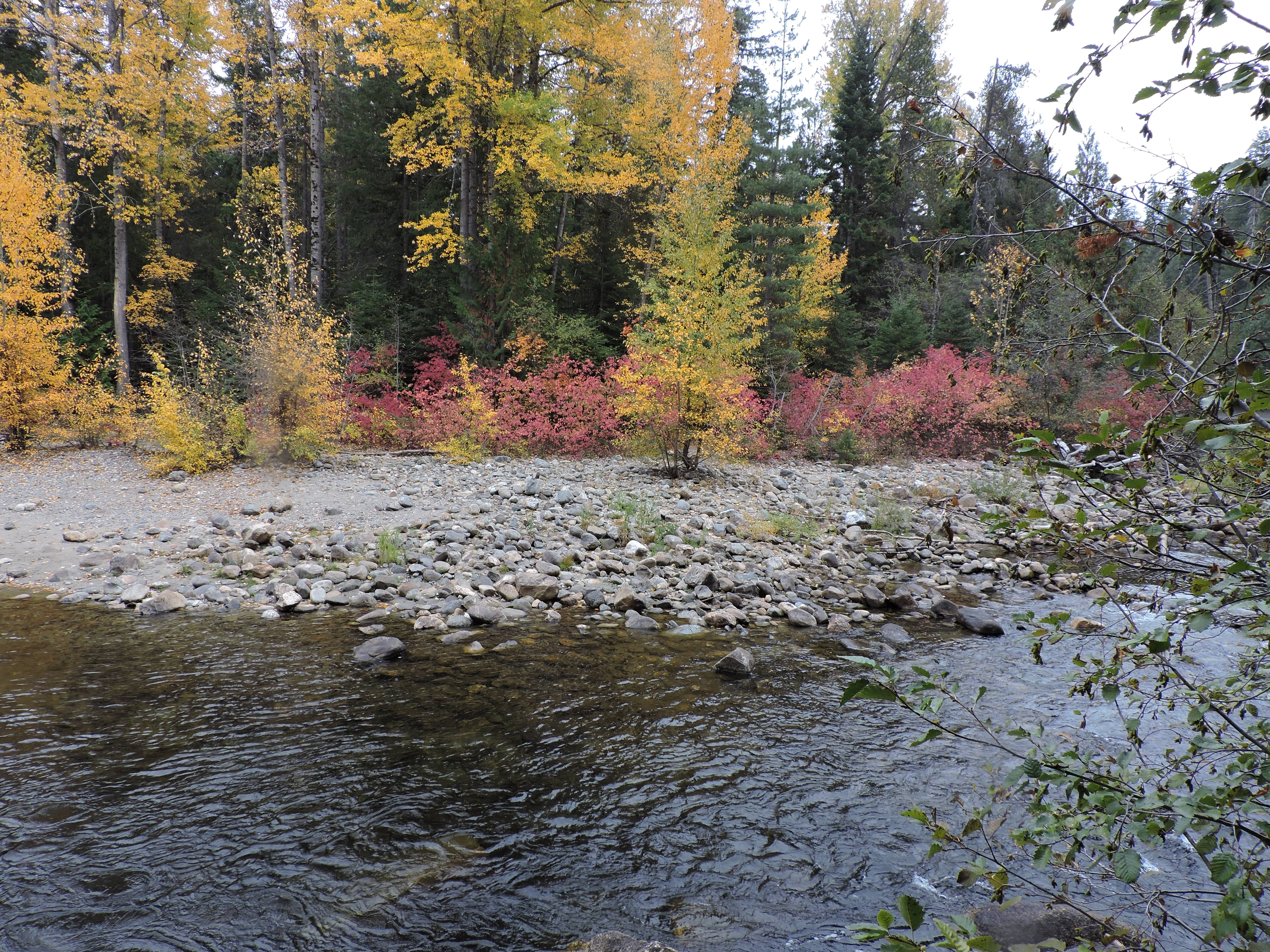
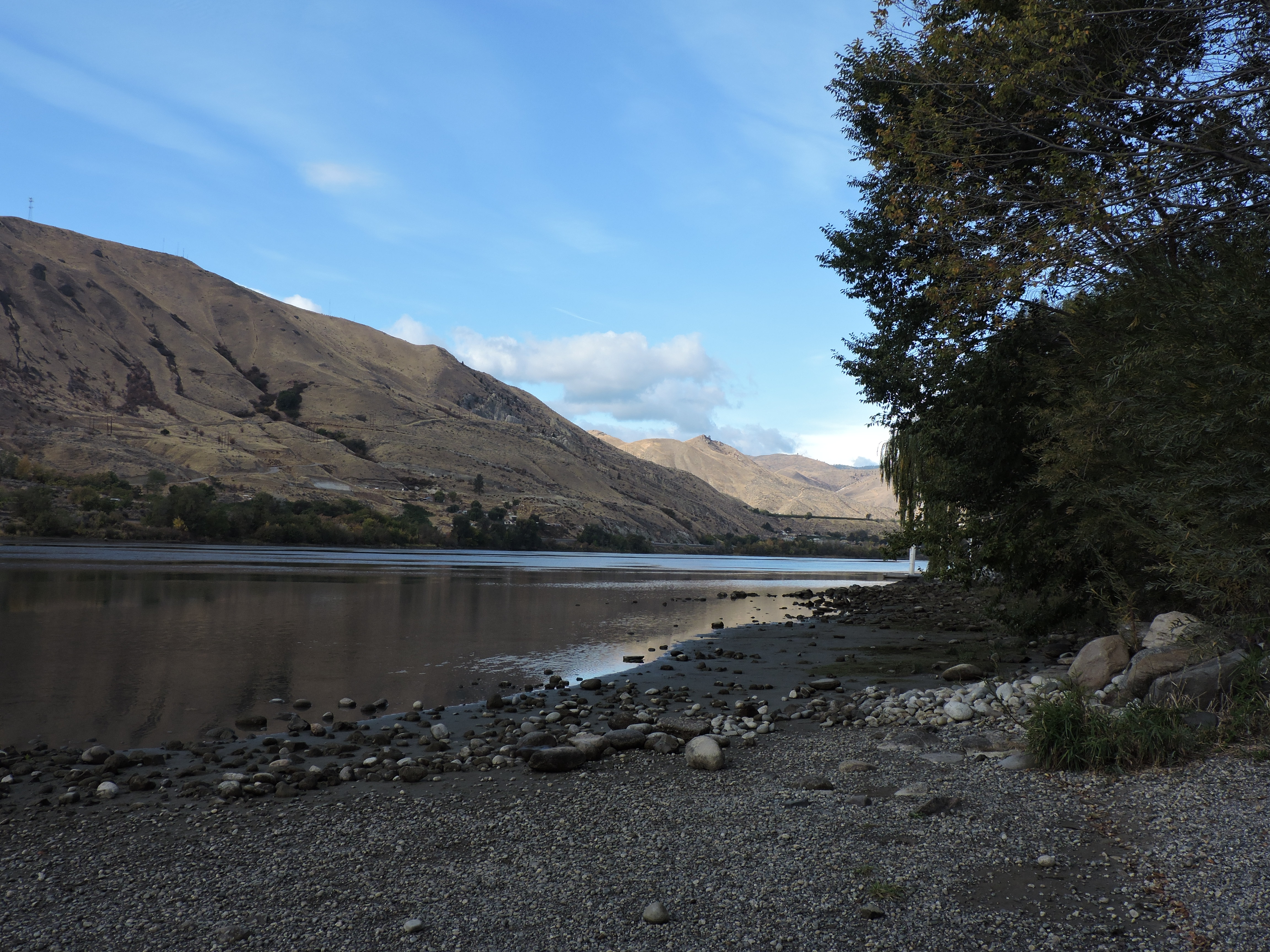


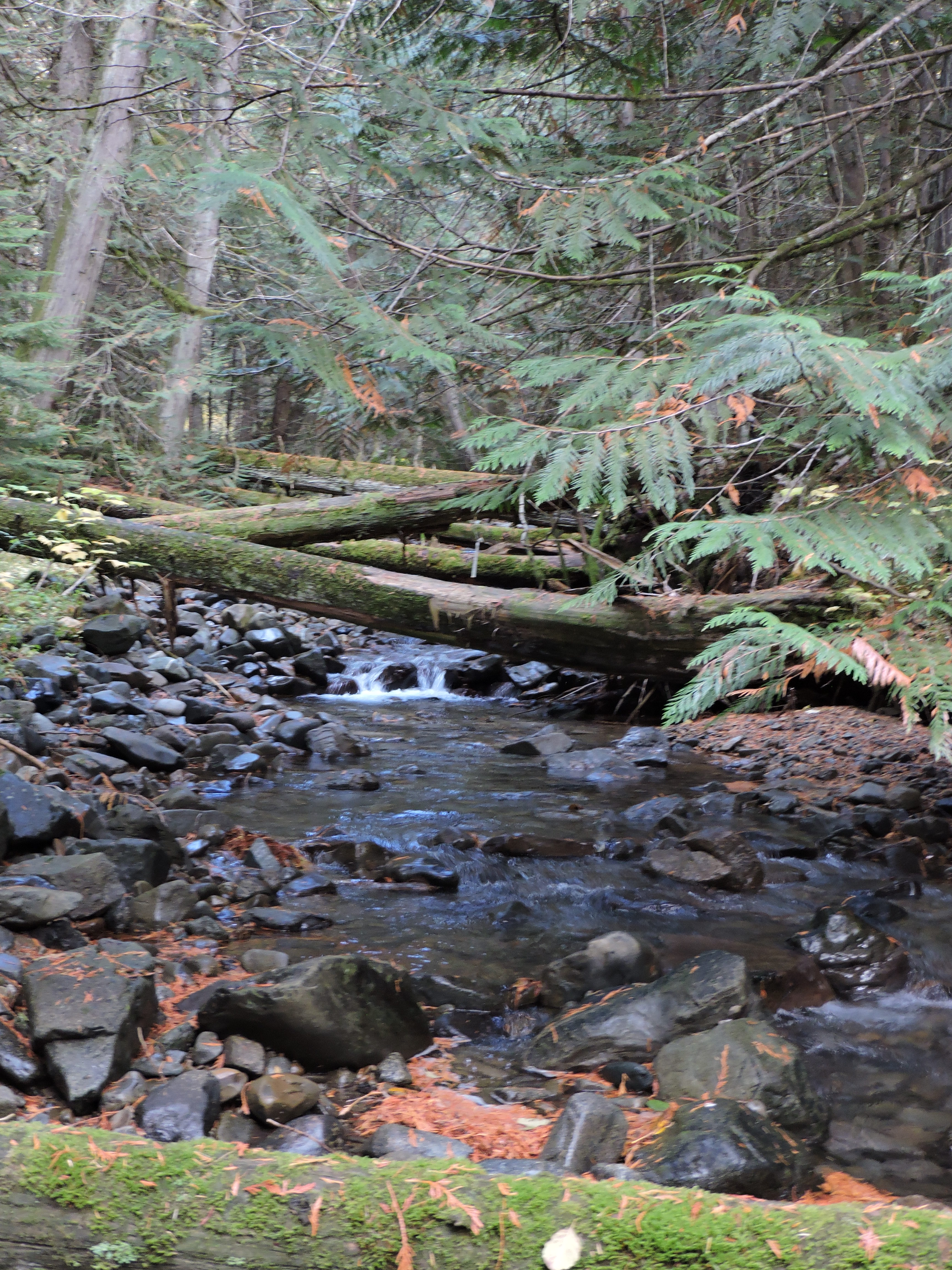

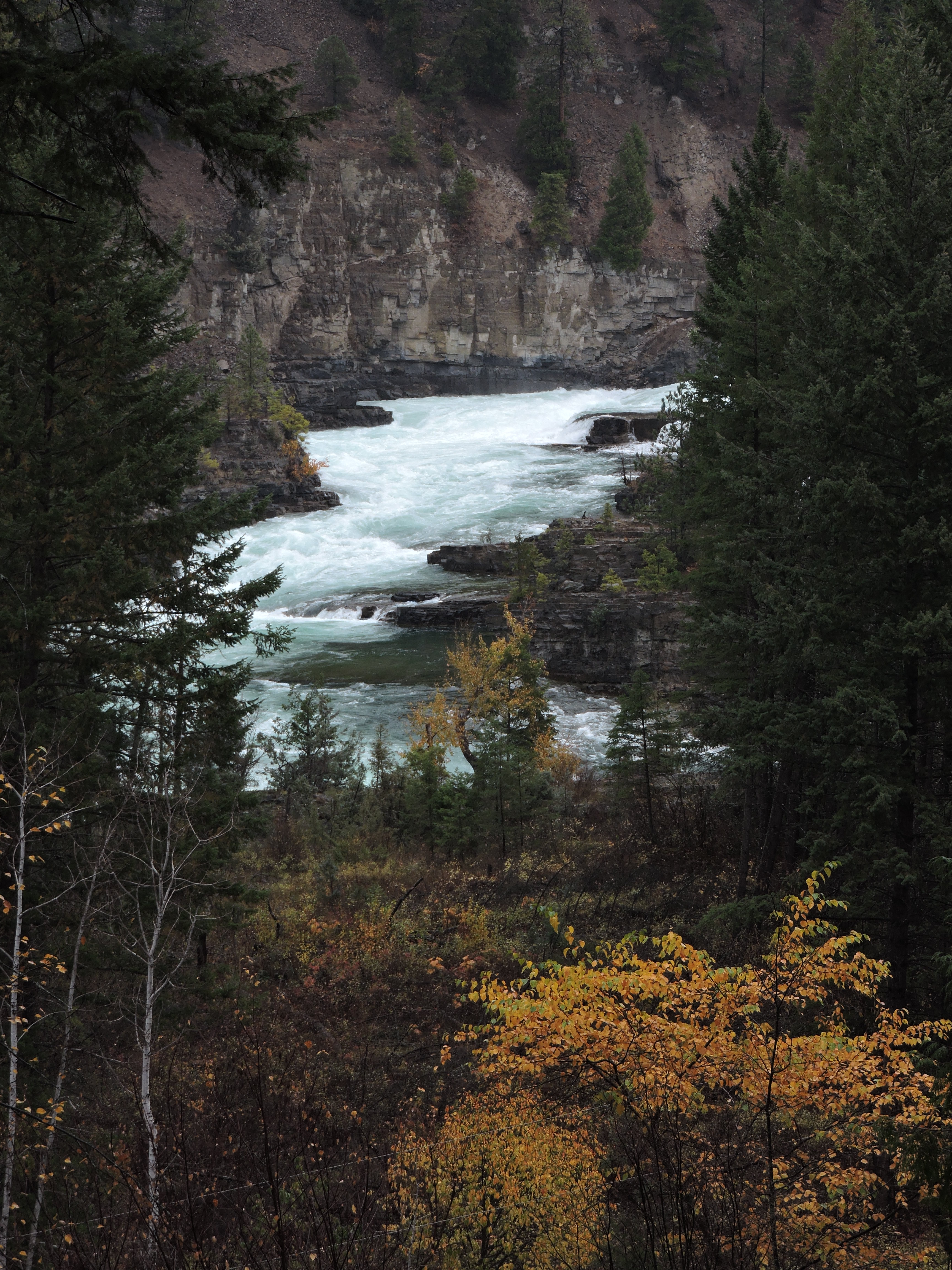
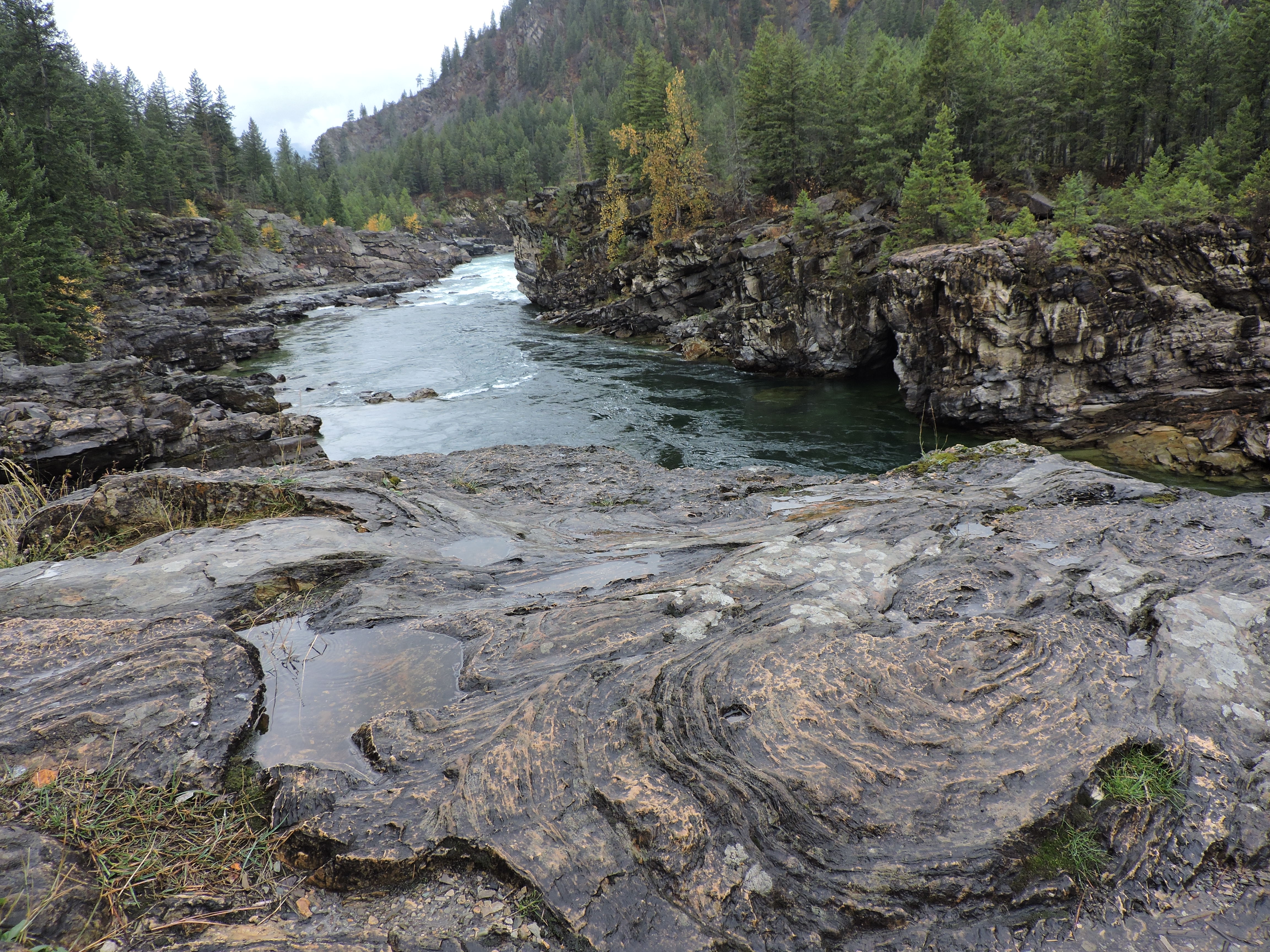
We drove about fifteen minutes into Montana before our first rock stop along the Kootenay River. There were things here that looked like agates but, in retrospect, probably weren’t. We had Kootenay Falls almost to ourselves just a bit later, where we photographed vivid stromatolite fossils – some of the earliest life forms, though maybe not the most agile, speedy or handsome. The next day we crossed Marias Pass in the Rockies and scooted out onto Montana’s high plains.
A few days later we took a couple of long new roads neither of us had seen before, east out of Roundup and then South through uninhabited wastelands to the Yellowstone River. I think we both now felt that we’d collected a treasure-trove of fine and interesting rocks but probably a minority of them were actually agates. It certainly hadn’t been wasted time but, to some extent, we’d missed the mark. We rolled south through a near-desert of sand, dry gulches and sage, scarring up sage grouse and a couple of golden eagles.





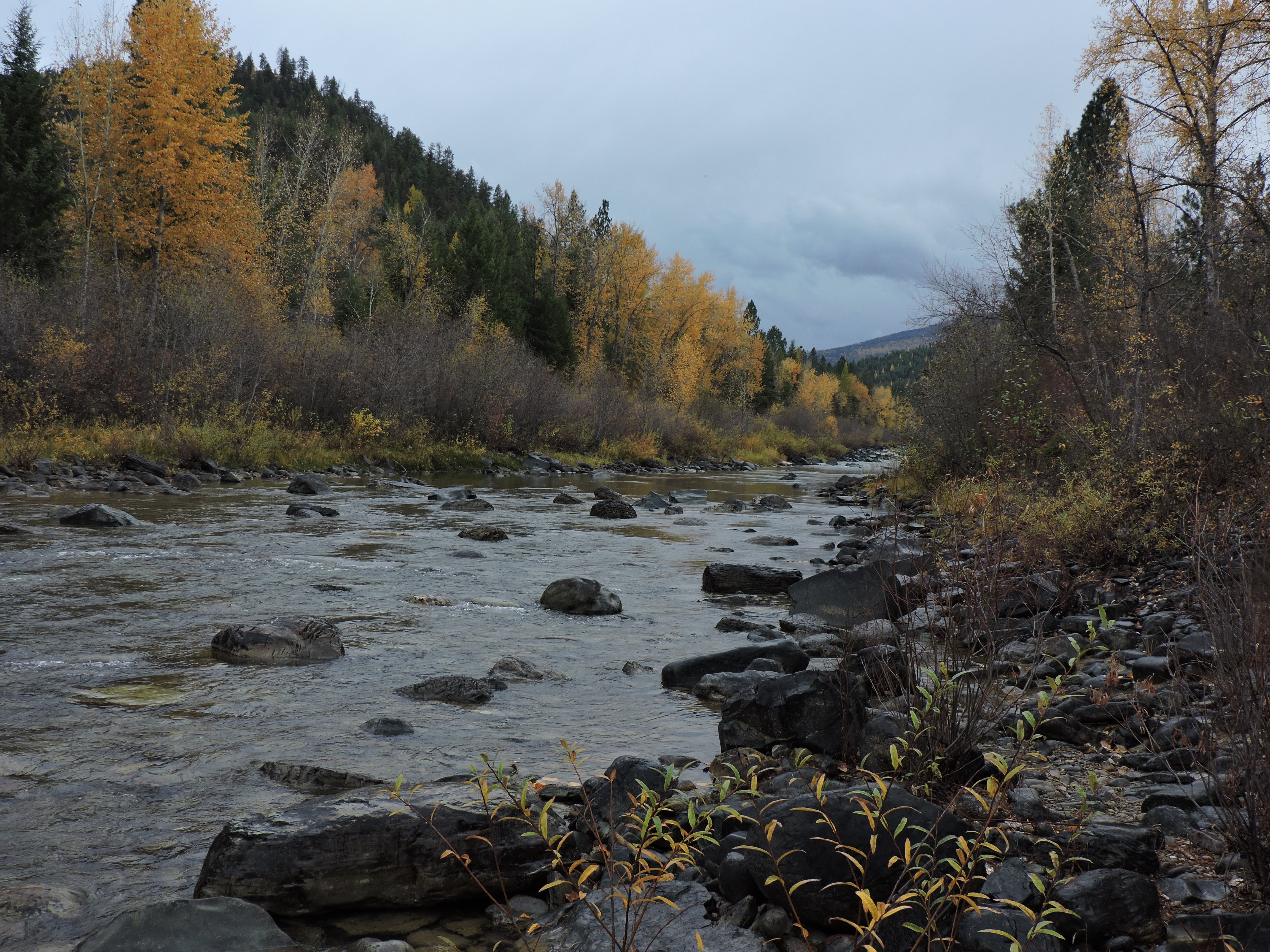

We’d been to this bridge over the Yellowstone before, in fact, twice before for me. During my long western walk, I’d hid out here through a scorching day. But back then I really hadn’t known what an agate was. I wouldn’t have recognized one if I’d held it, and I probably had. This was just as well, because if I’d had an interest in agates at the time, the walk across America would have stretched to perhaps three years. I might not have made it past this river, in fact.
There was a state fishing access area here and we paused first at the bathrooms. Leaving the car, we stopped immediately to pick up fragments and nodules of agates and jaspers. We didn’t move on from the restroom area for nearly half an hour. We did eventually get on the trail along the river though where we tried to hastily make for a major inlet stream that intersected the Yellowstone nearby. Unfortunately, the agates in the trail had other ideas. They called to us, tempted and seduced. It took us an hour to walk the quarter mile to the stream inlet.

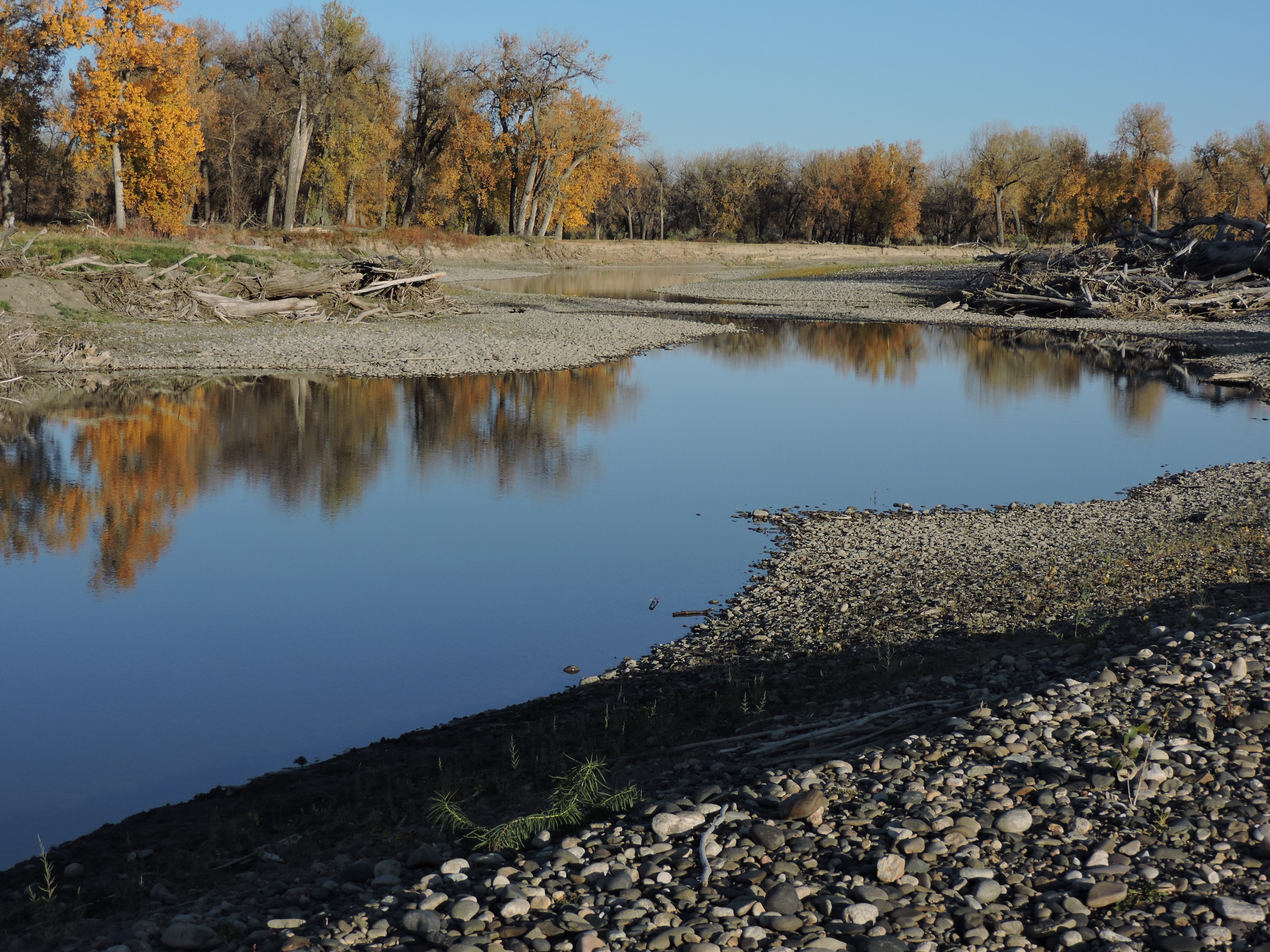

This was a low-water time of year and acres of portentous rounded river rocks were exposed here. A red-tailed hawk cried and wheeled overhead. We were already nearing our rock capacity, we knew this, but maybe we could fit just a few more…
Soon there was a Susan pile and a Cedric pile. And not just a pile but a pile of, predominately, real agates, huge Yellowstone River moss agates. Yes, they were ugly and pitted on the outside but holding them sunward, there was a gentle glow of translucence and something like a waxy honey with dendritic inclusions. It just couldn’t get better than this. We packed as many as we could possibly carry and then took nearly another hour returning to the car by way of rock-drifts that needed to be inspected. It was now certain that we were taking agates home to Pennsylvania – an amazing pile of agates waiting to be released from their encasements.
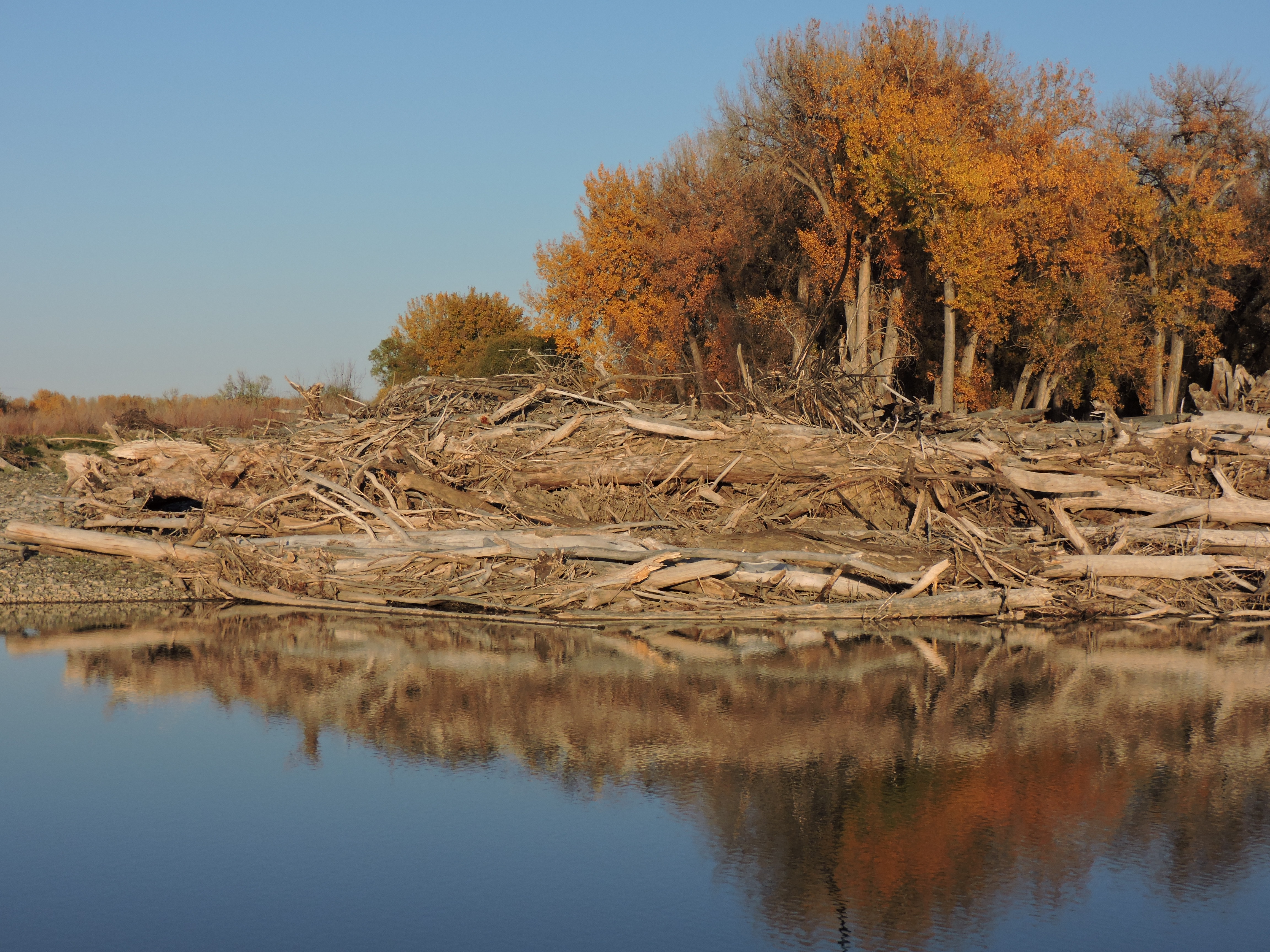


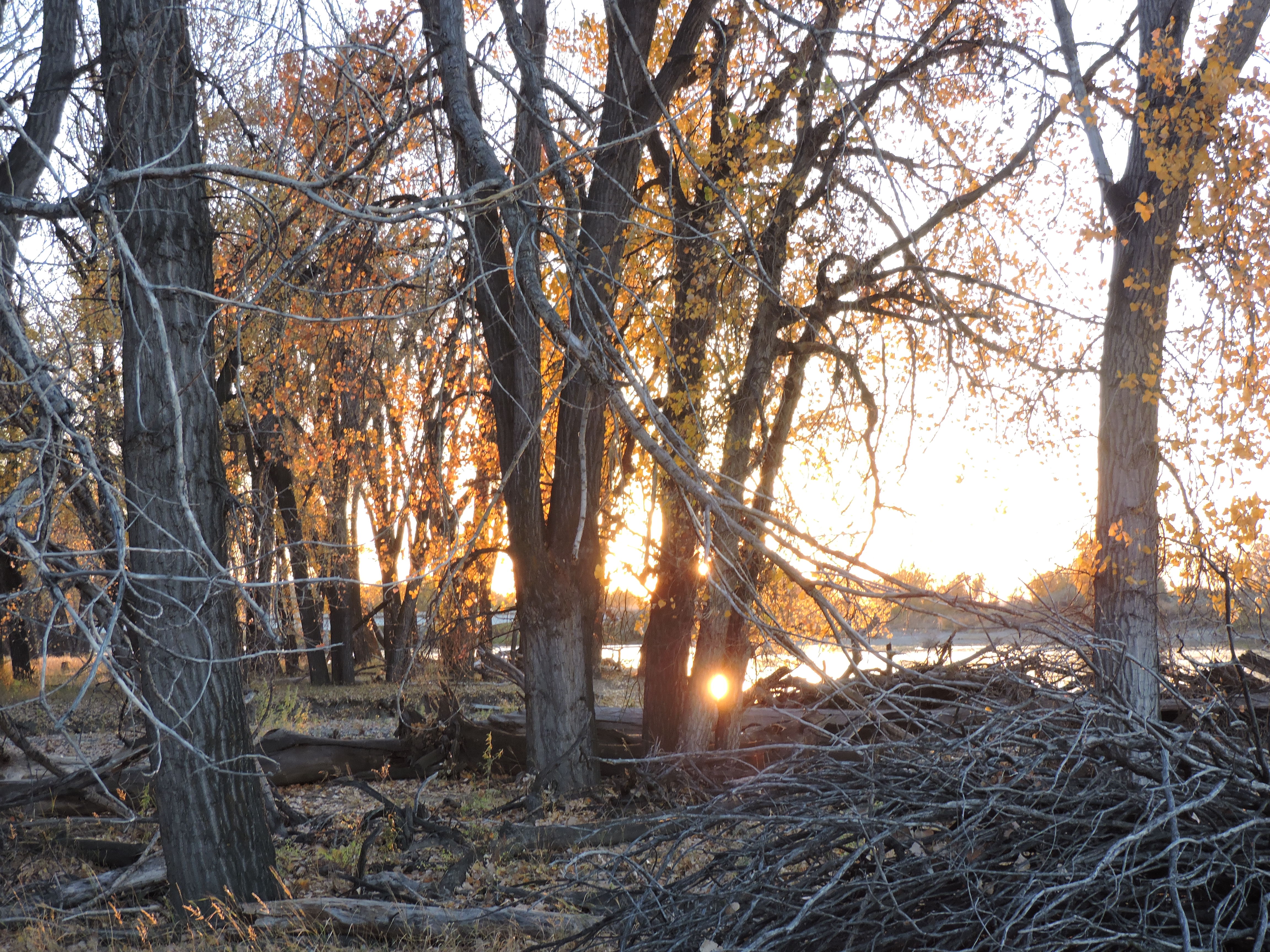
I woke at the Super 8, Miles City, Montana and snuck out for a run. And I was able to run only because it was too dark to see rocks. When I returned, however, it was light enough to make out the pebbles underfoot and so I scouted the back lot behind our hotel. This was probably a mistake. I had no bag but I filled hands and pockets to capacity with perhaps the most colorful and vivid agates we’d come across. I’d repeat this act the next morning before leaving.
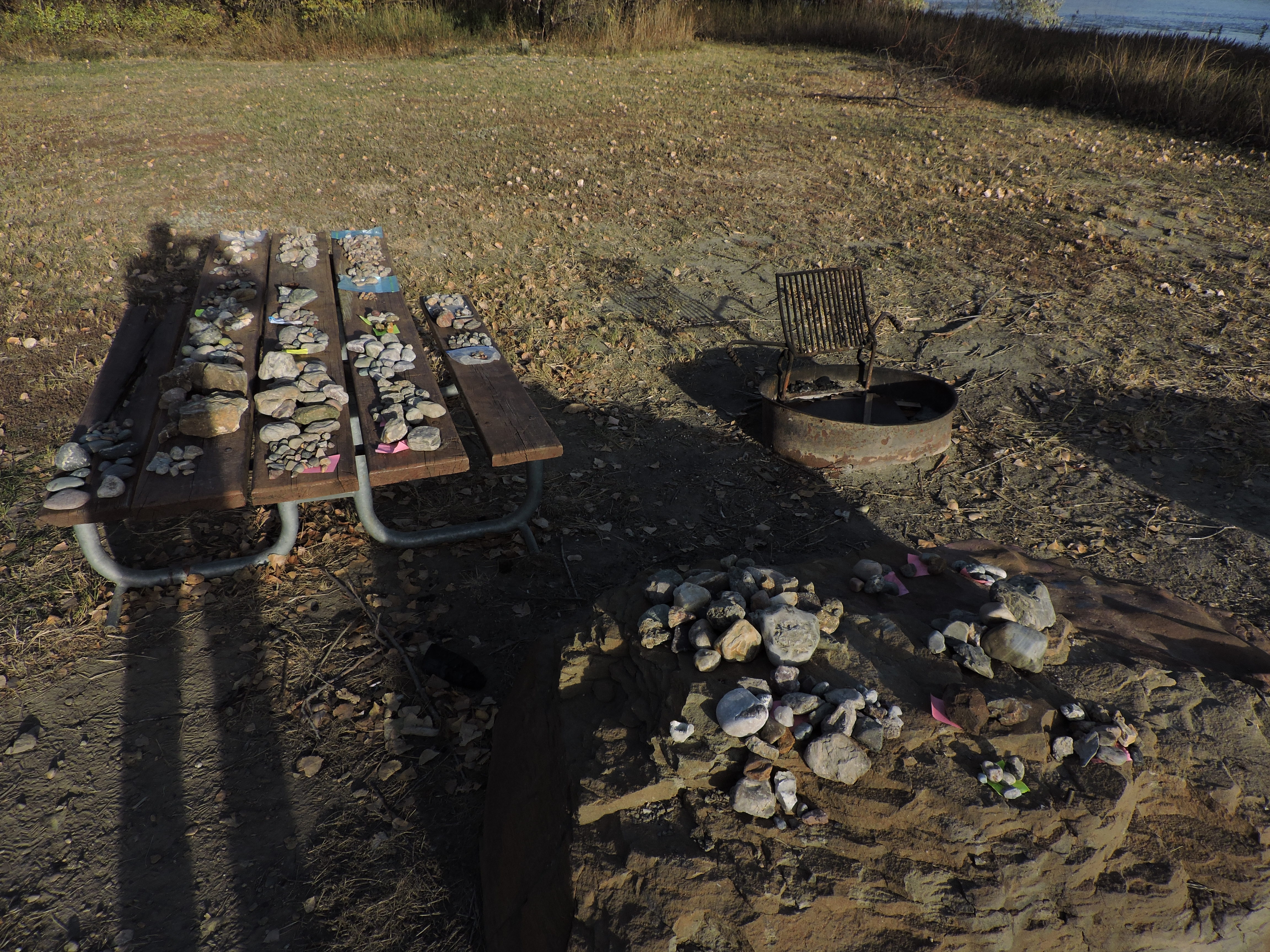
Late that afternoon and long into the evening, we took inventory. There was a secluded picnic table at a spot along the river where we opened the hatch of the car and laid it all out. It took over forty minutes to empty the car of its overburden. The idea now was to whittle it down, disposing of some things that certainly were not agates, nor was there any need to keep them. I broke some with a hammer, confirming their quartzite composition. But some that I broke revealed chalcedony – some jasper and some agate. We managed to toss out the least desirable quarter of our collection. This was good; we were going to need this space for more rocks.


We drove on toward North Dakota in the morning, through a more “badland” kind of region of stark and odd little buttes and eroding upright rock formations of all shapes and sizes. If there were good rocks to be found anywhere, this would be the place. We stopped at the Powder River to take a look. Susan wasn’t excited about the climb down but I cajoled, pleaded and finally assisted in the effort to get Susan down onto the broad gravel bars below us. I just had a good feeling about this.
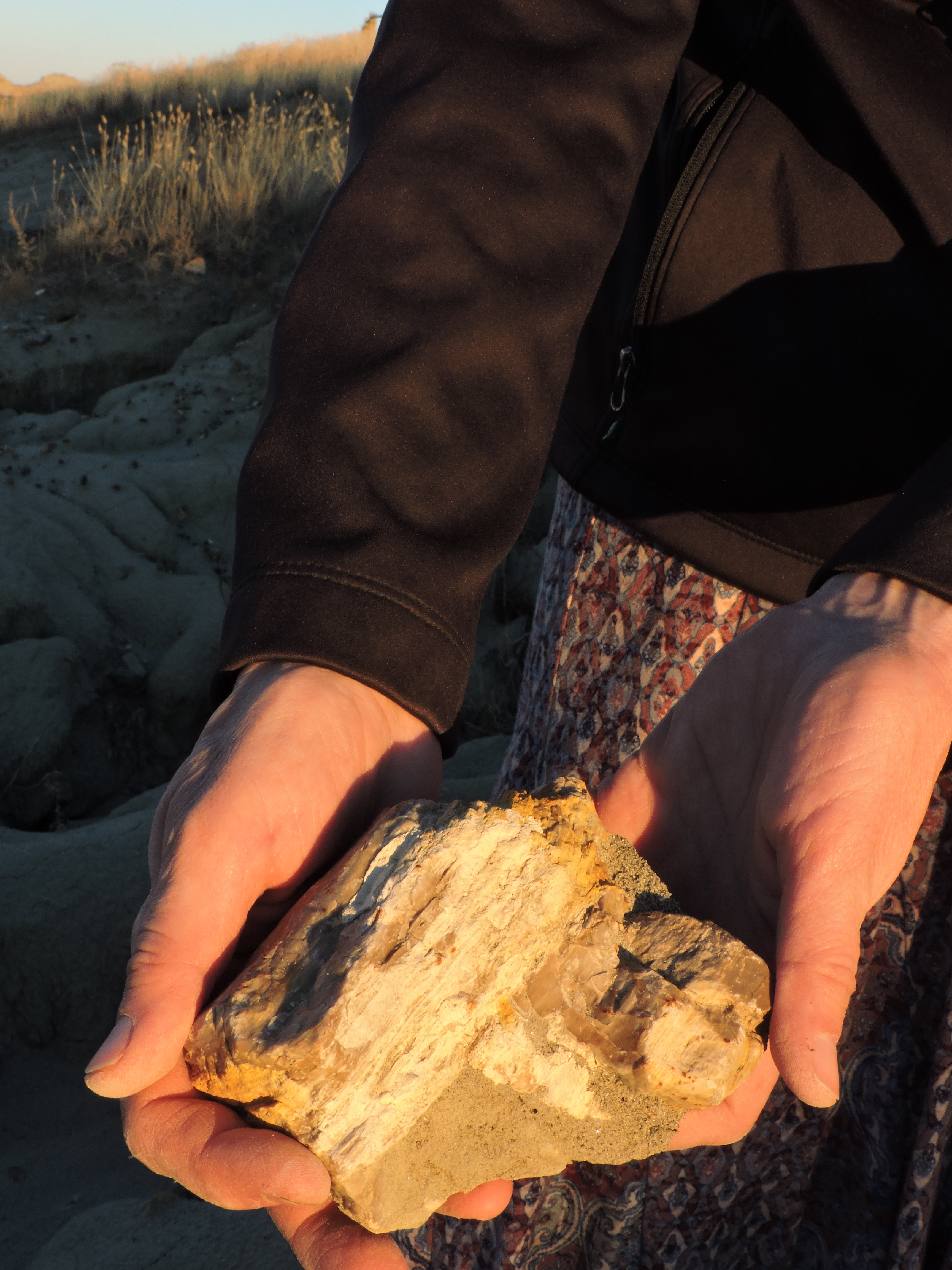
But Susan mainly just wanted a walk and so she took off downstream at a brisk pace with me lagging a good bit behind. When I caught up to Susan, hundreds of yards downstream, she was trying to pry something big out of the mud. Then she did turn it upright and I could see that this was the largest piece of petrified wood we’d seen so far – over a foot long. This alone had been worth the climb down. But now we looked around our immediate surroundings and realized that this rock was not alone. Petrified wood abounded here and it seemed like around a quarter of the rocks in this bed were agates.


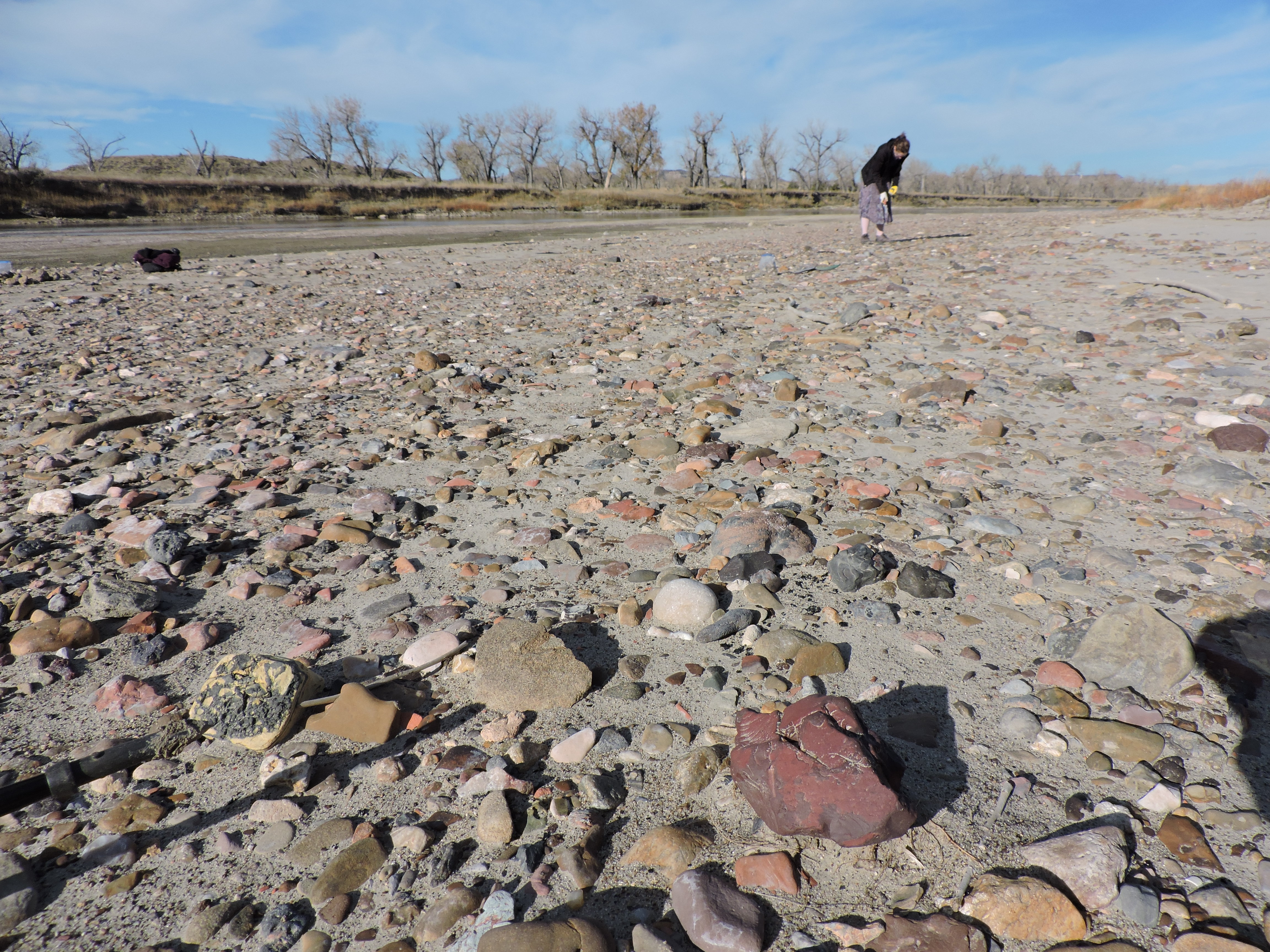


Half an hour later, I found myself at the water’s edge washing a “Cedric’s pile” and a “Susan’s pile.” Now we assessed and made the tough decisions. We imagined cutting these in the winter ahead and we wanted to pick those with the best stuff inside, if that could be determined at all. So, we held rocks up to the light and made best guesses and we filled a bucket and then piled as many as we could carry back in our arms too. The trip back to the car was a workout. But that’s not a complaint. I couldn’t have asked for a finer day to be out here in this desolate country collecting rocks by the bucketful.
It wasn’t long after that we crossed the North Dakota line and pulled in at a familiar set of structures. This was Jim Van Horn’s auto and cowboy museum at Marmarth, a place worth seeing the next time you’re in the Dakotas. Jim, his long time helper Marvel, and a few additional guests, welcomed us to the establishment once again with a home cooked meal and plenty of good cheer. It was good to see old Jim enjoying himself and laughing there at the table. There had been grave concerns for his health last time around.
We toured the new addition to the auto museum – a whole new huge quonset hut-type structure with a pristine new polished concrete floor and more than 50 new automobiles inside, acquired just since we’d visited two years before. Jim claimed he was in competition with Jay Leno who owns around 200 cars. Jim’s over 150 now. Jim’s cars, by the way, are virtually all pre-1950 and he specializes in the very oldest of cars, things hardly recognizable to my eye as automobiles. Jim was getting ready to display his new racks of over 100 Winchester rifles, recently donated to his little historical institute.
Before we left, Jim rummaged in one of his rooms and brought out a pointy piece of agate a little over five inches long. This piece was a meticulously knapped spear point, made of the same agatized petrified wood we knew so well from this region. Jim said that when they’d cleared the land for his home long ago, they’d found several such points. Never having washed around in a river, this one was still quite sharp. Then Jim said he wanted me to keep that one.
An hour or so later, having said our good-byes again for this year, Susan and I were working along a roadside wash-out on the outskirts of Marmarth. Shards of petrified wood glinted in the low-angled evening sunlight, emerging from this well-weathered clay hillside. We couldn’t have been happier. Susan seemed completely immersed in her “work” and I was more than happy to see that she had no desire to rush or to leave Marmarth too soon. I hadn’t known how Susan would take to all this. Before leaving home, I hadn’t known how I’d take to all this. It had been an awfully long time since I’d looked around at the rocks around me and I’d never, to the best of my knowledge, actually picked up an agate before. But there was an undeniable fascination and maybe even an addiction – the very best sort of addiction – that came along with all this. It was time to move on but neither of us really wanted to move on.


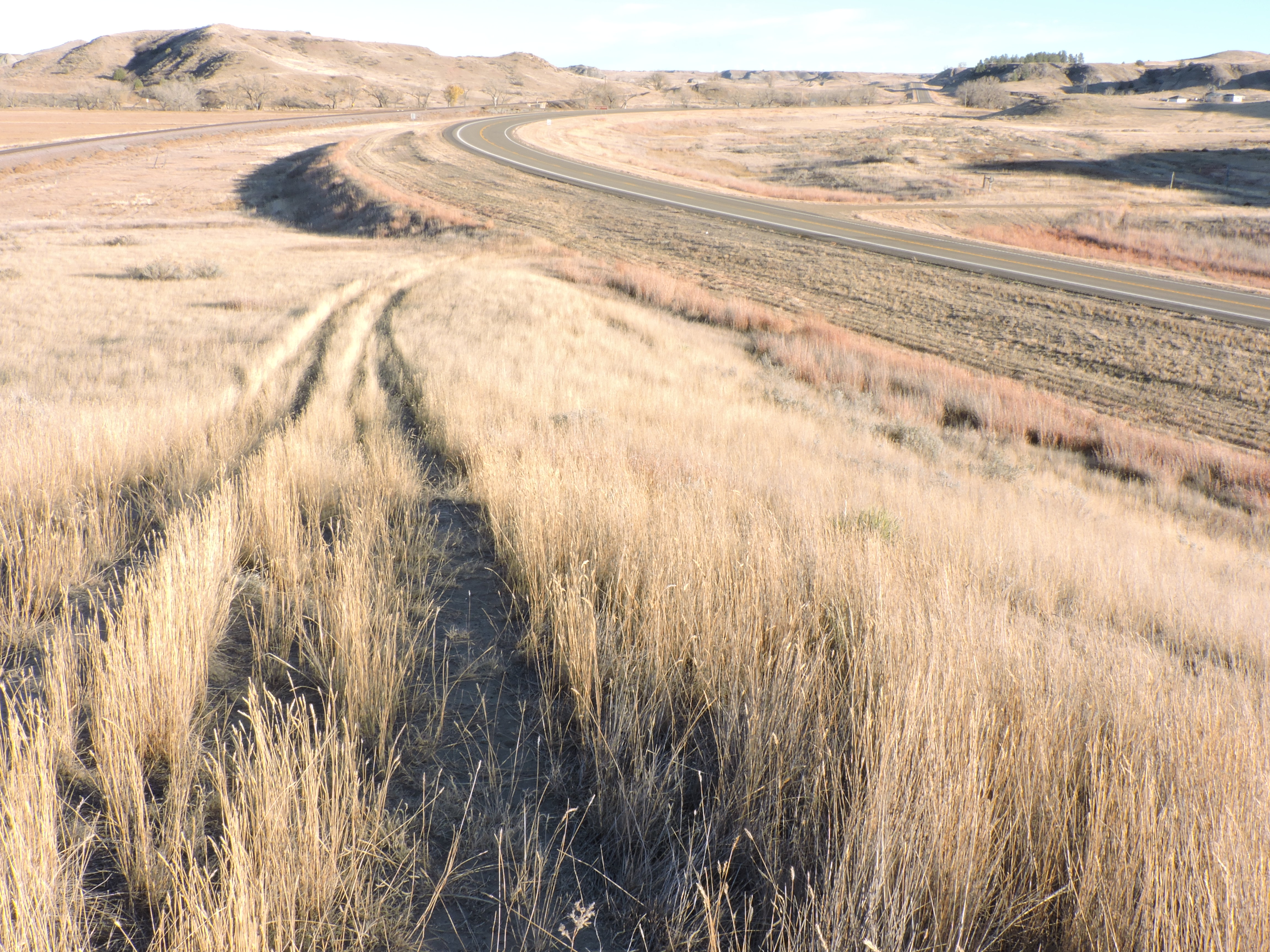



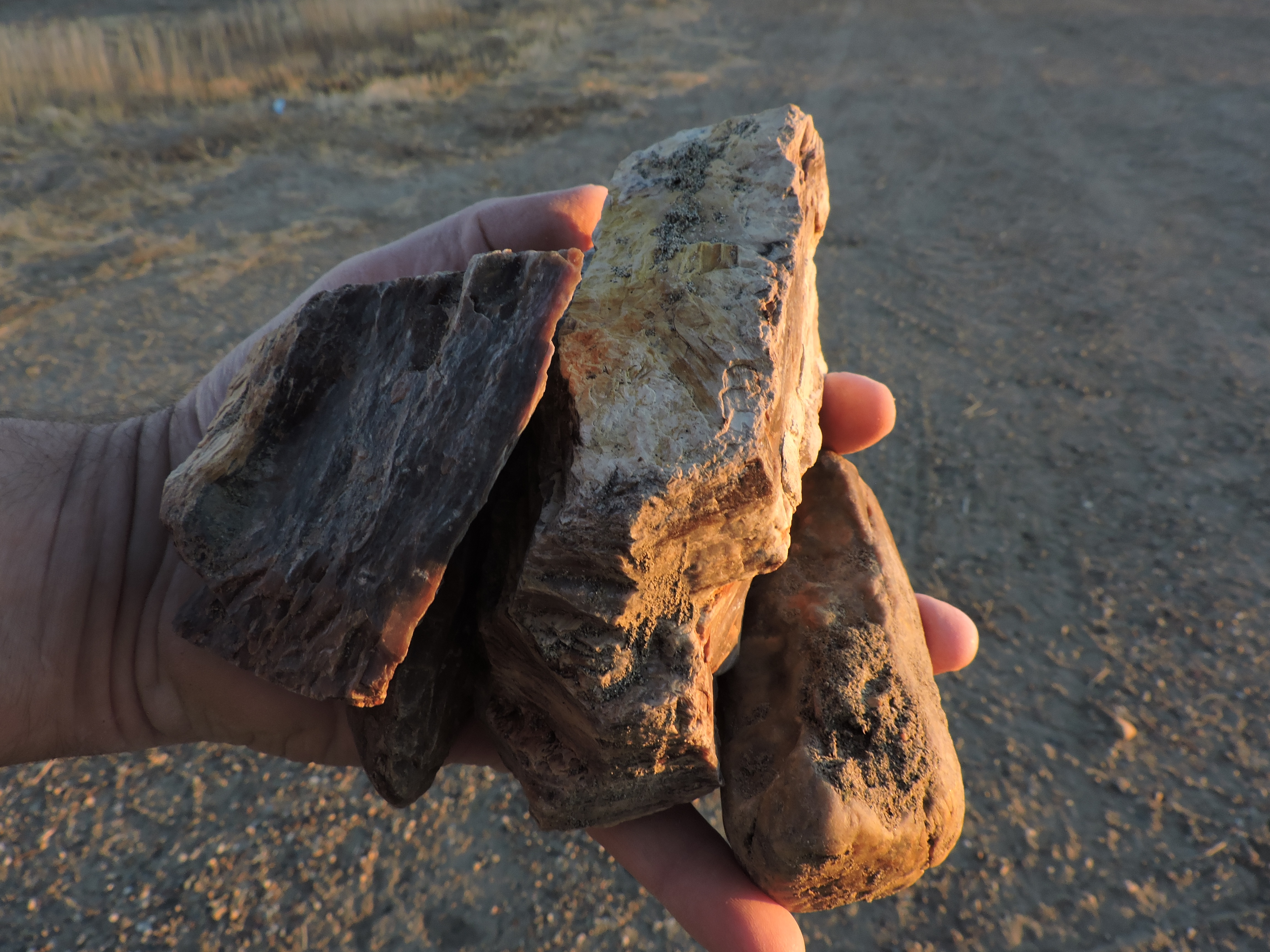
But we had places to be and people to see and, eventually, a home to go back to in Pennsylvania where we’d try to find space for a ton or so of lithic oddities. For tonight though, we’d stay at Lemmon, South Dakota, home of the sprawling Lemmon Petrified Wood Park. And we wouldn’t stop finding agates until Illinois. Just the best rock hunt ever, that’s all.

 Woodrise
yeah! Love the photos of the rocks perched above the alluvial sands which were washed clean and bright red
LikeLike